

















Mondays & Thursdays at 8 pm ET, May 14th - June 26th
Limited seats available to ensure personalized attention for every candidate. Secure your spot before the registration window closes. This may be the only Bootcamp in 2026.
The Path to a Military Cockpit is More Competitive Than Ever
Trying to navigate the complex application process alone is overwhelming. You're left guessing:
Where do I stack up against the competition?
Which squadrons should I apply to?
Is my resume good enough to even get noticed?
How do I stand out from hundreds of other qualified applicants?
Am I preparing for the right interview questions?
Who can I trust for accurate, up-to-date advice?
Leaving these to chance is a gamble you can't afford to take. This isn't just another job application—it's your entire future career!
Stop Guessing. Start Preparing with a Proven Plan.
The BogiDope Bootcamp is an intensive 6-week program that blends expert-led instruction, personalized coaching, and hands-on assignments to build your entire application package—fast. Whether you’re just starting or ready to interview, this Bootcamp gives you the decisive edge.
A strategic application plan tailored to your specific goals.
Optimized Application
A completed, professional aviation resume and cover letter that hiring boards love.
Interview confidence
Unshakable confidence and readiness for your pilot interviews.
Community & Accountability
Access to an exclusive community of peers and dedicated mentors to support you.
How It Works
Pre-Recorded Instructional Videos: Access anytime, learning at your own pace.
Weekly Live Labs: Interactive sessions with coaches and peers.
Small Group Breakouts: Personalized feedback & accountability.
Mock Hiring Board: Put what you learned to use & compete against your peers for the top spot!
your 6-week journey to a competitive edge
We've distilled the entire hiring process into a step-by-step, week-by-week curriculum. No fluff, just actionable strategies to get you hired.
Week 1
Discovery & Success Strategies
Explore paths to becoming a military pilot and dive into the unique lifestyles of Air Force flying communities. Learn what squadrons seek, how to stand out, and actionable steps to boost your competitiveness.
Week 2
Resume Mastery
Master the art of crafting a standout resume that showcases your skills and experiences to impress hiring boards.
Week 3
Cover Letter Strategy
Create a compelling cover letter that captures your story and sets you apart as a top-tier candidate for pilot selection.
Week 4
Networking, Rushing, & LORs
Navigate rushing events confidently and secure powerful recommendation letters that validate your potential and passion.
Week 5
Interview Fundamentals
Learn interview essentials – dress, demeanor, and answering techniques – to confidently navigate questions and avoid common pitfalls.
Week 6
Interview Excellence
Hone your interview skills through practice sessions with feedback to build confidence and refine your performance.
4 x Small Group Breakouts
Dedicated Coaching
You will have direct access to your dedicated coach throughout the entire process. Ask questions, receive feedback, and collaborate as a team during this exclusive program.
CAPSTONE EVENT
Mock Hiring Board Competition
Put your skills to the test in a simulated hiring board, compete for the top spot, and be crowned Bootcamp champion.
your 6-week journey to a competitive edge
We've distilled the entire hiring process into a step-by-step, week-by-week curriculum. No fluff, just actionable strategies to get you hired.
Week 1
Discovery & Success Strategies
Explore paths to becoming a military pilot and dive into the unique lifestyles of Air Force flying communities. Learn what squadrons seek, how to stand out, and actionable steps to boost your competitiveness.
Week 2
Resume Mastery
Master the art of crafting a standout resume that showcases your skills and experiences to impress hiring boards.
Week 3
Cover Letter Strategy
Create a compelling cover letter that captures your story and sets you apart as a top-tier candidate for pilot selection.
Week 4
Networking, Rushing, & LORs
Navigate rushing events confidently and secure powerful recommendation letters that validate your potential and passion.
Week 5
Interview Fundamentals
Learn interview essentials – dress, demeanor, and answering techniques – to confidently navigate questions and avoid common pitfalls.
Week 6
Interview Excellence
Hone your interview skills through practice sessions with feedback to build confidence and refine your performance.
4 x Small Group Breakouts
Dedicated Coaching
You will have direct access to your dedicated coach throughout the entire process. Ask questions, receive feedback, and collaborate as a team during this exclusive program.
CAPSTONE EVENT
Mock Hiring Board Competition
Put your skills to the test in a simulated hiring board, compete for the top spot, and be crowned Bootcamp champion.
Real Students. Real Results.
What Students Say
Made The Real Difference
"The breakout sessions were by far the most valuable - getting personal time with coaches in small groups was incredible. The small group setting was a good middle ground where there was more time for one-on-one questions."
"By far it has to be the interview process. This is something I never gave much thought to prior to the bootcamp. The interview experience alone justified the entire cost of the bootcamp for me."
"The accountability to actually complete my application materials was game-changing. Knowing I had to hit certain deadlines put a fire under my butt."
"I was offered the opportunity to rush a unit - likely due to BogiDope helping improve my application."
"I would have wasted SO much time if I had tried to do all of this on my own, just spinning in circles trying to figure out how everything works."
"The feedback and intel from so many experienced coaches made for the most efficient use of my time and efforts."
Which path is right for you?
We get it. You're a high-performer, but you want to choose the right tool for the job. Here’s the difference between our two main tiers of service.
BogiDope BOOTCAMP
The Academy is like getting the keys to a world-class gym. You get access to all the equipment (our video library, templates, and resources) and a proven workout plan, but you’re on your own to figure out how to use them effectively. It’s perfect for disciplined self-starters who prefer to work at their own pace.
BOGIDOPE PRO MEMBERship
The Pro Membership is like getting the keys to a world-class gym. You get access to all the equipment (our video liberary, templates, and resources) and a proven workout plan. The Pro Membership gives you access to everything, but you’re on your own to figure out how to use them effectively. It’s perfect for disciplined self-startes who prefer to work at their own pace.
Bottom line: If you want aviation career 'personal trainer' approach (accountability, personalized feedback, and the fastest path to the cockpit), the Bootcamp is for you.
Led by USAF Pilots with Hiring Board Experience
You’ll be coached by the best—a team of active and former military pilots who have successfully navigated the same journey you’re on now. They’ve sat on hiring boards, reviewed thousands of applications, and know exactly what it takes to get selected.
Flying Class One
This article is intended to give a comprehensive recap of what your time may look like at Wright-Patterson Air Force Base (WPAFB) while conducting your Flying Class One (FC1) wether that be with the Air National Guard (ANG), Air Force Reserves (AFRC), Active Duty (AD) or through a university commissioning source such as United States Air Force Academy (USAFA) or Reserve Officers’ Training Corps (ROTC). This article is written and is current as of October of 2023.
Pre-Departure
If you’re a Guard or Reserve selectee, a lot of your hard work on the forefront in regards to testing, applications, rushing and interviews leads to this trip. This is also likely the only obstacle that sits between you and OTS dates. If you’re an off-the-street hire from a Guard or Reserve unit, this very well could be your first time on military orders, so enjoy it!
Another note for off the street hires: If you’re able, get a Common Access Card (CAC Card) prior to your Flying Class One. Having a CAC card will make your life significantly easier getting on base and around Wright-Patterson Air Force Base.
If you’re an Active Duty or ROTC bubba, this trip will look slightly different for you compared to the Guard / Reserve folks including a more structured trip, no rental car, most meals coming from a white cardboard lunch box or the DFAC, and a sprinter van that you’ll pile into for trips to and from the respective sides of Wright-Patterson Air Force Base with the other cadets / selectees.
Day 0:
Day 0 starts on a Sunday with a flight from your home of record to Dayton, OH. Dayton’s airport is rather underwhelming, but everyone there is super helpful. The airport also gets a lot of government contractors and military personnel traffic, so they can help you if needed.
After you land, ROTC and AD candidates will more than likely have to either Uber or taxi, while the Guard and Reserve selectees can drive themselves with a rental car (if your unit sets you up in a rental). Regardless of how you get there, find your way from the airport to the historic Wright-Patterson Inn at 2439 Schlatter Dr. Bldg. 825, Area A Wright-Patterson AFB, Ohio 45433. The Inn isn’t anything to write home about, but it’s special in its own way. Once you check in and get settled, it’s good to reflect over the crimson red comforter, yellow tiled bathroom and old hotel carpet while thinking about all the other pilots that have gone through these same steps en-route to acquiring their wings!
Outside of the Wright-Patterson Inn.Inside a standard room at the Inn.
Try and call it an early night. If you’re in the pre-assigned Group A (you will receive this assignment via email the week prior) start fasting at 7 PM, and prepare for giving 12 vials of blood and a urinalysis bright and early in the morning by drinking lots of fluids. If you’re a part of Group B, eat as late as you want but it’s also wise to start drinking water in preparation for the next few days.
Overall disclaimers relevant for all days at your FC1:
Things worth bringing with you every day:
A pen to sign and fill out medical documents
Some snacks (something like peanut butter crackers does well at holding you over until lunch after giving blood or if some of your exams dig into your lunch hour)
A good book (there is no reception in the waiting room)
Sunglasses (at some point you’ll have your eyes dilated so sunglasses are a must)
Your prescription glasses
What to wear: They say to dress business casual if you are an off-the-street hire. Khaki pants or chinos and a collared shirt or button down works great!
Things to consider: Everyone at Wright-Patt is there to help you on your way to becoming a pilot. Although it’s a stressful time, ensure you treat everyone with the utmost respect. No one is out to get you.
Day 1:
Group A will head right across the street from the Inn to a large medical building called “Wright-Patterson Medical Center” for the aforementioned blood draw and urinalysis. (This building is located at 4881 Sugar Maple Dr, Wright-Patterson AFB, OH 45433)
If I remember correctly, show time was 6:45 AM. Show up, check in, drink water and wait your turn. You’ll get called back and likely take blood prior to doing your urinalysis. The blood draw room is no bigger than 10×10 with nothing but a computer and two blood drawing chairs facing each other that have a bar attached to the front in case you pass out. If you’re as lucky as I was, you’ll be in that room with your buddy who’s in for a show when the Lead Medical Technician asks the new guy if he wants a shot. A kid no older than 19 years old and fresh out of AIT will say “Sure, but it’ll be my first time” and have shaky clammy hands while inserting the needle. Regardless of your fears, try not to pass out while giving blood because if you do that will likely lead to another conversation with another Doc. Finish your blood draw and urinalysis, then join group B at building 840 (address below) for the rest of your tests.
Group B will report to Building 840 at sometime around 7 AM. This building causes issues for some people to find. Building 840 is where you’ll spend most of your time throughout your FC1. The best piece of advice I have to find this building is to type “WPAFB Bldg 840” into Google Maps. This trick only works for Google Maps, not Apple Maps or other navigation apps.
Once you arrive, walk into the doors directly in front of the flag poles. This entrance will give you a straight shot into the gathering / waiting room. Head straight down the hall and right before you reach the Ophthalmology room (it’s labeled above the doorway), look left and there should be an open room with 30 black chairs, 2 TV’s, and a fridge. Find this room and you’ve found the place you’ll spend most of your time throughout the week.
Around 7 AM your Medical Technician Lead will walk in and start briefing you on standard operations. You’ll start with a packet or two of paperwork, then start the number of events sitting between you and an approved FC1. It’s important to note that you do start this process collectively under Group A or B, but it will not end that way. You’ll have buddies finish their FC1 by the end of day 2, while you or others may take the full 4-5 days to work through any pre-existing or discovered medical issues. Try not to compare your situation to others. An approved FC1 is an approved FC1, regardless of how long it takes.
You’ll go to and from this waiting room while being called back for exams. There is really nothing to do in this room, but it’s in your best interest to stay put so that you don’t miss a Doc calling you back. This is also the room with no reception so either talk among the crowd, watch a movie, read your book, or take turns playing PS2 on the back TV. You could establish yourself among the group by picking the movie to play on the DVD or VHS player (if you know how to work one of those things). The original Top Gun on VHS is guaranteed to be a hit among everyone there.
When lunch rolls around ROTC / AD bubbas will eat out of the white cardboard lunchbox in the waiting room fridge (seen in the photo above at the bottom of the left fridge), while Guard and Reserve guys and gals can head upstairs to the cafe and secure a panini, or go off base to get a quick bite. If you go off base I’d recommend getting something quick and bringing it back to eat in the waiting room so you don’t miss your name being called or an opportunity to knock out another requirement.
Day 1 will end at the time your Medical Technician Lead decides (normally around 4-5 PM). If you made friends in the waiting room, exchanging numbers isn’t a bad idea and neither is coordinating somewhere to meet for dinner. It’s doubtful you know anyone else in Dayton, OH to get dinner with anyway. Get dinner, try to call it an early night. Group B should start fasting no later than 7 PM and drinking fluids for your blood draw tomorrow morning.
Day 2:
Day 2 looks a whole lot like Day 1, but the groups are flipped. Group B goes across the street from the Inn for blood work and Group A reports directly to Building 840. Day 2 is chaotic because it’s almost every man for themselves from this point forward. Like yesterday, you start as a group then get singled out for your individual medical evaluations with no real order. This controlled chaos could lead to situations like you having not started your eye exams while your buddies finish everything and get their stamp of approval by Day 2.
Evaluations that are done throughout the days consist of the following:
Height, Weight, Sitting height measurements: These measurements are easy, self explanatory and out of your control.
Blood pressure and heart rate: No surprises here, this is standard just like any medical check up. Your FC1 can be an anxious time, so to help reflect good numbers on both your heart rate and blood pressure exams I recommend consuming no caffeine, creatine or supplements within 5 days prior to or during your Flying Class One.
Hearing: Since everyone prior to an FC1 has to go through Military Entrance Processing Station (MEPS), you’ll know exactly how this exam goes. This evaluation is just like MEPS, but instead of being in a packed room this evaluation is done in a singular noise canceling box that’s no bigger than your standard closet. Mouth breath and try not to psych yourself into hearing the beep.
Dental: Your dental exam is similar to a standard civilian dental exam minus the teeth cleaning. They will take X-rays.
Medical records review with Doc: For this part you’ll be taken to a room to discuss with a Doctor all of your previous medical history. Now is not the time to shoot yourself in the foot and mention the Swine Flu scare you had in 2008 or an ankle sprain you had playing 7th grade Football for the first time ever. Truthfully answer any questions asked about what’s in your medical records, and you’ll make it out just fine. If you have something you’d like to discuss with a medical professional prior to this your Flying Class One, I would recommend looking into the BogiDope Military/FAA Medical Consultation which is a 45-minute medical consultation with BogiDope’s Aeromedical division. Our aeromedical professionals offer extensive experience and knowledge with military & FAA aviation medical requirements as well as the inner workings of medical waivers. All calls are 100% confidential and independent of the Air Force or FAA.
Optometry: This subject is multifaceted. There are going to be more eye exams done to you throughout your time at your FC1 than you even knew existed. Be prepared for a dilation, traditional vision exam corrected and non corrected to 20/20, color vision exam, lens topography measurement, eye laser measurement, the same depth perception exam done at MEPS, eye pressure test, a scan of the back of your cornea and more. Also if you cannot pass the non-corrected 20/20 vision exam or the depth perception the first time around, you’ll even be issued some sweet new spectacles from the Doc (photo below). I had friends fly through optometry in 1-2 hours while I took probably 7-8 hours over the course of 2 days. Everyone’s eyes are different.
The issued glasses look identical to this, just black frames.
Electrocardiogram (EKG): You’ll get taken into a medical room and get about a dozen electrodes stuck to you to measure things like how fast the heart is beating, the rhythm of the heart beats (steady or irregular), and the strength and timing of the electrical impulses as they move through the different parts of the heart. Once again this is an evaluation out of your control, so just breath.
Chest X-rays: They will take x-rays of your chest and chest cavity. You won’t hear or see anything about these results unless something out of the ordinary shows up.
Neuropsychological exam: This evaluation is done in a computer lab with about 25 of your other FC1 peers. If you’ve ever gone to an PSI testing center to take your FAA written exams, this looks alot like those locations. Outdated computers behind a beige fabric cubicle and a set of headphones from the 90’s hung up is an accurate representation for this room. This exam is all online and about 4 hours in duration but split up into four parts with a short break in between. These exams are a combination of a mental health screening, memory test, cognitive thinking test, overall general knowledge test and personality test. Although this exam holds no weight in the final decision of your FC1, it is still important. You also do not want to be the guy that gets questioned why your IQ portion of these exams was so low.
Final talk with flight Doc: This is your last step. You’ll visit the Flight Doctor one last time after completing all of the evaluations over the past few days. The Doc will start with a standard physical then dive into the results from all of your evaluations and exams. It is important to note if you are recommended for a waiver you won’t get told yes or no officially until your waiver clears the Surgeon General. After this conversation with the Doc you’ll have a good idea what your odds are of an approved FC1.
Day 3-5:
If you have a day 3 or 4 like I did, you’ll find fewer and fewer candidates left as the days pass. You very well could be the only individual left in the waiting room watching a movie alone. Press on through the “We see something we want to run more exams on,” and have hope you’ll get that final approval. Days 3, 4 and 5 if needed are allotted to finishing up any exams or evaluations you have not yet completed.
Whenever your time does come to an end at Wright-Patt or if you’re looking for something to do after being released for the day here are some solid recs:
Dayton, OH Recommendations:
National Museum of the US Air Force: This museum has enough airplanes and pieces of history in it to keep any aviation enthusiast occupied from open to close of business for 5 days solid. Imagine 4 large classic semi circle hangers packed full with all things aviation and space. Best part: it’s free. They do close early (5 PM) everyday so this can and should be a multi day stop for you. The only piece of advice I have when visiting is to bring your walking shoes and avoid the elementary school field trips.
SR-71 Blackbird on display at the National Museum of the US Air Force.F-117 Nighthawk on display at the National Museum of the US Air Force.
Texas Roadhouse Tuesday: For some reason a lot of the staff members at WPAFB go to the Texas Roadhouse in Dayton on Tuesday and call this activity “Texas Roadhouse Tuesday”. Coming from Texas I was skeptical, but rallied a group of other FC1 participants and went for dinner. This is a guaranteed good time and meal.
Golf: This Is hit or miss depending on the time of year you are in Ohio for your FC1. I went in July, and after a group of us passed our Flying Class One, we played a round of golf on WPAFB’s golf course called “Prairie Trace Golf Course”. You can rent clubs for $20 and split them with your partner, then get a cart and play 18 holes for $24. All-in, with the purchase of a sleeve of golf balls since none of us came prepared, this was a relatively cheap good time. The course is also well-maintained and the fairways play pretty straight for novice golfers.
Prairie Trace Golf Course at Wright-Patterson Air Force Base.
Go to Cincinnati for a Reds Game: This is also dependent upon the time you are in Dayton, OH for your FC1, but if your orders align with a Cincinnati Reds home game the hour and twenty minute drive to Cincinnati might be worthwhile to catch a Major League Baseball Game.
All in all:
Your Flying Class One can be an incredibly stressful and nerve-racking time. For a lot of candidates everything up until now has been in your control. The Flying Class One strips you of any control and evaluates you on the basis of being “fit to fly” deemed on rigid pre-set standards. Relinquishing all of your control, trusting in the Docs and medical personnel at Wright-Patt, and taking a deep breath is my advice. During my 5th hour of eye exams and 7th Depth Perception evaluation, one of the Optometry Doctors reminded me that during your FC1 it is extremely rare for one exam or evaluation to disqualify you. It almost always has to be a collection of things. This was my first time hearing this. Going into my FC1, I always heard that failing your color vision or depth perception would be an automatic disqualification. This isn’t true, there were several people who had multiple tries at depth perception and my class even had a candidate fail color vision and get re-tested.
If you have any concerns of previous or ongoing medical issues, I would recommend reading the most recent revision of the Air Force Waiver Guide HERE and considering a BogiDope Military/FAA Medical Consultation call HERE.
If you have any questions feel free to direct them to me at Riley@BogiDope.com and if you would like another BogiDope perspective on your FC1 find it HERE.
Goodluck and Godspeed.
Decision Point
If you’ve been keeping up with this article series, you’re now familiar with the basic mechanics of getting into Navy Flight School, working your way through the syllabus and what your first tour in the Fleet is going to look like. If I’m totally honest, few people pursuing this path give too much thought to what’s beyond getting to the Fleet and flying your platform operationally. And it’s certainly not a bad thing to keep focused on what’s right in front of you as you grind through the process, as it’s common that five-to-seven years will elapse between getting your commission and obtaining a tactical qualification that marks you as vaguely useful to the USN or USMC. That’s a long, hard stretch that’s best consumed in day-sized bites.
So you’re in the majority if you’ve spent very-little time considering what lies beyond. In the spirit of BogiDope, however, I’m here to make you smart on what comes after and give you a few nuggets of wisdom to consider for the long game.
Generally speaking, the Navy has a very fixed path they want folks on. The Navy is obsessed with the idea of making command and advanced-rank competitive, so they want to push everyone to do everything so they will all be able to compete for the job of Chief of Naval Operations. On a quick side note – if you don’t actually want to be an admiral and/or command the entire fleet, you’re best served not admitting this right away.
At any rate, the path for junior aviators is all laid out for you: you’ll spend two-to-four years in training, then do a three-year tour as a junior officer in your platform. Afterwards, most pilots will head to a three-year shore-duty job as a ‘production’ tour, i.e. as an instructor in some capacity. These jobs range from basic flight school all the way through the FRS squadrons and the Navy’s graduate schools for combat aviation at the Naval Aviation Warfighting Development Center (NAWDC) in Fallon, NV – which has at least one relatively famous subunit known as TOPGUN (all caps, no spaces).
After three years as an instructor, the Navy has a little timing-buffer while they await the results of the promotion board to O-4. Ideally, they’ll send you back to the fleet in a slightly non-traditional role which we call the ‘disassociated sea tour’ where you’ll do something slightly different, or back to a squadron to serve as a tactics instructor if you’re a graduate of a weapons school. If your timing is ‘early’ (i.e. you were fast in the training pipeline), you may have a chance to go get a master’s degree; if you are late, you might be headed straight back to the Fleet as a department head. After this, the Navy has more firm paths to keep you on to make sure you’re eligible for squadron command.
If you are reading this carefully, you might realize that each one of these new jobs comes 18-36 months after the last one, mostly involving “sea” (or deployable) duty and may involve cross-country moves. This may not sound great to you depending on your family situation. The Navy hasn’t quite caught up with the times, and the force-structure for aviators still generally assumes each officer that chooses to have a family comes equipped with a dedicated, obedient, non-working spouse to organize everything in your life and periodically move your entire family cross-country while you’re working long hours or gone at sea from time-to-time. Don’t take this the wrong way—it’s entirely possible to be a hardworking Navy or Marine pilot and still have a spouse with a career and a passel of happy kids. Do not, however, imagine this is easy to pull off. It will go much better for you if you’re aware of, and actively managing, the challenges—and make sure anyone that’s looking to tag along for the ride has some idea what the ride actually looks like. Please. For their sake and for yours.
Right around the time you finish up your production tour, you will likely be approaching the end of your first service commitment. Currently, service obligations are six years for NFOs, eight years for jet pilots and seven for all other pilots, starting at the date of your winging. In other words, you’re likely to be ten-to-twelve years deep before you even get a choice to get out. This decision point can be tough, so you need to make sure you’re well-educated about your options.
Get out: At ten-ish years deep, you’ll have some skillsets the civilian market is interested in. Obviously, the airline route is lucrative and available, but the non-flying skills that made you a good Navy pilot to begin with will earn you plenty of interviews in all kinds of fields. If you get out, you ought to think about whether or not you’re going to affiliate with the Reserves. It’s possible to earn a military pension in the Reserves, but it doesn’t start paying out until much later in life—typically 60 years old. Some potential Reserve options are as follows:
Flying job in the reserves: These jobs are nowhere near as common in the Navy or Marine Corps as in the Air Force, given the relative paucity of Reserve units, but they’re available. Especially for tactical-jet pilots. If you’re wanting to try a change of scenery, the Army or Air National Guards can also be a great landing spot, allowing you to choose where you want to live and what you want to fly. These jobs tend to be more like part-time jobs than traditional reserve jobs. Mixing one of these with an airline job can be very lucrative. And a good way to keep having fun while flying, as most military pilots find the airline brand pretty boring.
Non-flying Reserve job: This will look like the standard one-weekend-a-month, two-weeks-a-year gig you’re probably familiar with. The Navy has ever-changing rules on when, and under what circumstances, they can activate and deploy you but suffice it to say that, at some point, you will have to stop your civilian-life and do Navy things again for a while. Probably for 6-12 months in a remote part of the world.
No reserve job: If you leave the Navy voluntarily and don’t join the reserves, that’s it—clean break. If you are required to separate from the Navy (e.g. you fail to promote to O-4 after two attempts), then the Navy hands you a decent wad of cash to compensate you for that retirement for which you’ll no longer be eligible. However, if you join the Reserves and earn the retirement after all, you’ll have to pay it back.
Stay in and stay ‘on track’: The Navy’s going to pitch you lots of on-track jobs. These are, for the most part, relatively arduous and/or involve lots of deploying. As a retainment-booster, the Navy frequently offers bonus packages (“Aviation Department Head Retention Bonus, or ADHRB) to aviators to incentivize officers to stick around. They’ll shell out for five years or so in sums ranging from insulting ($5k a year) to potentially interesting ($40k a year), depending on their need for different flavors of pilots each year. As a general rule-of-thumb, if the economy is stroking and the airlines are hiring, the Navy’s going to be doling out big bonuses. If not, they’ll try to cheapen the deal. If you take the ‘blood money’ and do your job well, you may find yourself on track for advancement, command and a long career in the Navy. Even if you don’t, by the time your bonus-related service commitment is up, you’ll be 15ish years deep into your career and probably considering military retirement carefully.
Stay in, but get ‘off track’: Taking certain jobs, particularly non-flying ones, or not taking the bonus when it’s offered to you may be viewed by the Navy as a lack of commitment to their goal of making you eligible for higher-rank and command. They likely won’t dole out the seemingly choice jobs and may get stingy with promotion opportunities. Recognize this fundamental truth about mid-career Naval Aviators: all of the advice you’ll be getting on your career will come from people like your detailer or your commanding officer who are all ‘on track.’ If you want to do something wild, like get an advanced education – working quasi-regular hours to support a more sustainable family-life – or even just stick to flying airplanes and keeping the paperwork numbers down, you’re going to have to search out those who have done things like that and figure out how it’s done. This is because the formal processes aren’t super helpful. Jobs like this do, in fact, exist, but they aren’t well-marketed. The best path to finding them is by buying a cold beverage for those you meet who seem to have found such jobs and picking their brain.
What’s right for each individual varies as much as the individuals themselves. The important thing is that you research your options so that, when you’re put to a decision, you’ve got an idea of where you’re looking to go. It’s never a bad thing to keep your options open, but most of the paths in the Navy have fairly strict on- and off-ramps so that, at some point, you’ll need to decide. If you take one thing away from all of this data, hear this: while you’re working your way through the standard path of Naval Aviation as a junior officer, make sure to take some time to talk career-paths with the people you meet along the way. And with your loved ones, as what they’re willing to do can be a key factor in your decision-making. These sources of practical knowledge will be your best references on current conditions and what options are really available. Investments made in knowledge are rarely bad ones!
Fleet Meat: What to Expect in the Fleet Replacement Squadron and Your First Fleet Tour
Once you get those Wings of Gold after what can be two-to-three years of continuous training, it’s time to go do the nation’s business for real, right? Well….no. Wrong. You’ve got at least several months of formal schooling ahead, followed by another one-to-two years of informal school before you’re actually useful. Consider yourself warned: you need patience to get through this whole thing, and if you don’t do well putting on a humble ‘student’ face, you need to do some attitude adjustment before you dive into the pipeline. Your next set of orders after Flight School will be to take those shiny-new wings and head to the Fleet Replacement Squadron (FRS) in the type of aircraft you’ve been assigned to “get your learn on.” Again. As an administrative note: while this process is broadly similar across both the Navy and Marines, this article will be Navy-centric and the Marine differences will be highlighted later.
The good news is, once those wings are on your chest, you are at least a little more valuable to the Navy as a whole. Students in the FRS (sometimes referred to as the RAG, or “Replacement Air Group”, which harkens back to the days of the unit’s function being to replace combat losses) are still unavoidably students. But “coneheads,” or “cones,” as FRS students are sometimes known, are no longer entirely faceless. I recall seeing a sign posted as a reminder in the scheduling shop of my FRS unit: “Remember, cones are people too.” You will see no such reminders before you get those wings. The FRS may even grant you a Friday off if you are trying to take the weekend to get married, for example. Before heady thoughts of three-day marital weekends start making you feel too much love from the system, recall that you’ll be wearing a flight suit and those wings are sewn on a Velcro patch. This is by design: it is not too hard to remove Velcro patches. Stay on your game.
The FRS, like other flight schools, starts with the basics: aircraft ground school & systems, simulators for emergency procedures and a few familiarization flights. Soon enough, regardless of your platform, you’ll be diving into tactics and reading a lot to make sure you know your crap. The information tends to come at you like a firehose, and you’ll be expected to drink up. You will not have time to master the first skill before you’re handed a second. This is okay; the Navy has done this before, and they’ve figured out which skills you’ll get better at with time. Go back and look at your notes for an early-phase flight later in the phase when you’re feeling overwhelmed; you’ll see that stuff you were sweating ten flights ago has already become second nature. At this stage, in platforms with both pilots and NFOs, the students are combined again. Sometimes you’ll fly with instructors, and sometimes you’ll have to work through the flight’s problems with fellow students.
And now, for the obligatory “Attitude” section. . . it’s huge. Still. Always. A good attitude will make people want to help you. A bad attitude will make people want to watch you fail. You will need help at some point from everyone: daily from your instructors and often from your classmates as well. It’s just too much data to absorb on your own. Do not make yourself the subject of discussion when the instructors get together around the ready room table! All of the instructors are fresh out of the fleet and have close ties to their fleet units. It’s not an exaggeration at all to say that your reputation as a good officer/aircrew begins the day you check in to the FRS. As you near graduation, unit commanders will be in frequent contact with their ‘moles’ inside the FRS, asking about which cones have ‘it’ and which cones are hazards to themselves in the aircraft. These communities are very, very small. Your professional reputation is built every day in the FRS.
Tactical jet and E-2 pilots will finish up their tour with another trip to the aircraft carrier. This time, loaded with confidence from their experience in the VTs, the daytime traps will probably be far more enjoyable. This joy will be sucked out of you and replaced with abject terror when they make you do it in the dark. Advances in technology have made this process far more automatic and less frighteningly manual than it has been in the past in some platorms, but it is still something to throw your aircraft at 135kts at a moving ship in the dark. Don’t get in your own head too much about it. Focus on the moment, land the aircraft, then forget the moment as soon as it’s over so you can focus on doing it again. This kind of compartmentalization is a key to be mastered for your future career.
Upon graduation from the FRS, you’ll be ‘patched’ to a Fleet squadron and will meet that unit wherever it is. The unit could be in a maintenance downtime phase, with few flying aircraft, or it could be downrange dropping bombs the day you get there. You theoretically have the knowledge to plunge right in at this point, but don’t get cocky; in practice, it takes another year or two before you have the chops to administer useful service to the country in your new platform.
Some communities are more intense about callsign culture than others, but it’s still a worthy topic of conversation as it points to a key component of fleet Naval Aviation culture. A callsign is a nickname, and many Navy pilots are forever known by them, almost to the point where people you’ve deployed with may not know your actual name. The primary function of having everyone known by callsigns (the French call it your “Nom de guerre,” or “War name,” which I like) is to remove rank from the cockpit. Yes, you will call your commanding officer ‘sir’ or ‘ma’am’ a lot, but not much in the cockpit. Things are moving too fast for rank to interfere with the right answer to a problem, and callsigns help break down the rank structure in a place where it is not always helpful. Unlike the Air Force, where your callsign is typically cool, the Navy callsign culture is to use your nickname as an axe to chop down your ego. Ready room culture is all about banter, which is both a bit of fun and a way to apply subtle corrections to people. It is not a great place for the overly sensitive, and a bit of thick skin is in order in a Navy squadron. Pro tip: if you really don’t like your nickname, pretend to like it a lot; they’ll probably change it for that reason alone.
Freshly patched Navy pilots and NFOs head to the Fleet for what is commonly referred to as the “J.O.” (junior officer) tour. This tour is the foundation for the rest of your career and typically the most revered. As a ‘nugget’, you will be stressed by the responsibilities that get thrown at you, but the vast majority of these problems are in the aircraft. Older aircrew have to deal with a lot more paperwork than you do. Enjoy it when you can!
There are various qualifications that are available to you as you hit the Fleet. You’ll be expected to progress along a tactical syllabus. Helicopter and tactical jet aircrew will work with increasingly large numbers of aircraft. All platforms will expect increasing mastery of complicated, dynamic and technically-specific tactical execution. A typical JO tour is 36 months and may involve one or multiple deployments, depending on operational tempo and timing. You will enter into it much like flight school – that is, ears open and mouth firmly shut; by the time you finish, you’ll be mentoring the nuggets. This is an exceptionally busy time in your career, and it is not easy to integrate what the Navy would regard as distracting additional stressors like getting married and having children, but it can be done.
You’ll also go through a series of ground jobs, which are additional duties you’ll be expected to handle while simultaneously keeping on top of your flying duties. Some of these jobs will include leading squadron junior Sailors, including the maintainers working on your aircraft. You are not expected to become a maintenance expert, and please don’t kid yourself and think you’re there to tell your two-decades-of-service Chief Petty Officer how to run their shop, but you can’t be in charge of those who change aircraft tires if you’ve never even seen your shop change a tire and don’t know what instructions they reference. You’re there to learn from your senior enlisted Sailors so that you’ll have some idea how things work later on in your career when you have more responsibility.
The rule of thumb as a Navy JO is that there are three areas on which you are judged: Your abilities in the aircraft, your abilities in your ground job and your social act as a ‘good guy/gal’ and facilitator of squadron cohesion. Do two out of three well and you’ll be fine. . . so long as one of those is to be good in the aircraft. In other words, if your paperwork skills are mediocre, you’d better be leading the charge setting up the squadron social activities and dismantling cliques; conversely, if your social life revolves around changing diapers, you’d be best served to slay it at your ground job.
Timing in general is something a lot of your career from this point forward will depend on. It is something you don’t have much ability to affect, but make sure you know all the details before you write something off as ‘fate’ due to timing. Top performance ranking paperwork is typically handed out near the end of an officer’s tour, either during the annual report cycle (January for JOs) or during a unit commander’s change of command, so the timing of your departure and that of your closest contemporaries has tremendous implications in the paperwork shuffle. Similarly, tactical qualifications may not be available to you if you’re too junior when the assets are available or too close to rotation to make the expensively-obtained qual worth the unit’s effort if you won’t even make that unit’s next deployment. You can’t worry too much about it, but you need to be aware of it. If the system believes you have serious potential, they will figure out a way to fix glitches in your timing that aren’t your fault, and the skipper has tools available you’re not aware of, presuming you’ve earned it with your performance.
While it is a long grind from the start to the finish of the training process, by the time the process is over, you’ll have earned the right to be proud of what you have accomplished. Take it one day at a time when it seems overwhelming and learn the day’s lessons well. You’ll find, in the end, that you’ve got a diverse collection of skills to call on to solve the challenging and interesting problems Naval Aviation careers throw at you. In our next article, we’ll briefly touch on the highlights of the early-to-middle parts of a Naval Aviation career to round out your picture of what you can expect before you dive in.
This article’s objective is to give you an overview of what Navy flight school looks like generally with an eye towards the attitudes and trends that may make a candidate successful while they’re there. I’ll assume you’ve been reading along week-to-week, and are all up to speed on the necessary steps to get to this point, so I won’t restate them. But for those of you inclined to skip ahead, I’d advise caution. The hardest part of Navy flight school, for many, is the plethora of steps required before they’ll let you show up in a VT (Navy training) squadron wearing a flight suit in the first place!
The Navy or Marine Corps has already invested considerably in screening candidates by the time they report to Primary Flight Training in either Pensacola, FL or Corpus Christi, Texas. They’re not out looking to drop people, but they won’t hesitate to drop someone whose attitudes and performance do not make the standards. They’re also in the instructional business, so your first screwup isn’t likely to be your last; you are a student and expected to make a few mistakes. That said, there’s no reason to give instructors any ammunition. You are expected to act like a professional: be in the right place at the right time with the required knowledge loaded in your brain. If you do that, and are humble and eager to learn, you will get plenty of breaks. People that get dropped at this phase are people who think they’ve already got it made and don’t need to put their heads down and work hard.
Flight school scheduling can be erratic. This isn’t intentional per se, but is an accurate reflection of what a Navy flying career is going to look like. In this regard it is, effectively, training you for the future. Sometimes you will be told you’re not even classing up for weeks or months, only to get a call the following Friday that you start on Monday. You’ll be told to be ready to fly a particular event by a particular time, but if the airplanes are broken or the instructors are overbooked, you may not even make the flight schedule. The Navy does not live in your proverbial chili with respect to what you are doing with your time when you are not on the flight schedule, or what you do when your 9am flight gets weather cancelled. Should you study in the downtime? Should you grab a thirty-rack of CL Smooth and head to the beach? It’s over to you. If you can’t figure out how to organize your time and show up ready to slay when it’s your turn to work, Naval Aviation isn’t too interested in your services in any case. Make sure you are mentally prepared for the random and frequent transitions from heinously overworked to ludicrously undertasked.
Primary consists of six-ish months of ground and flight instruction in a propeller-driven trainer aircraft, these days the T-6B Texan II. The T-6B is a lot more airplane than the light General Aviation aircraft you saw in IFS; it’s got a turboprop engine and ejection seats and will be more than adequate at this stage of your career to induce humility. Regardless of whether you’ll fly helos, heavies or fighters, everyone starts with Primary in the T-6. Primary flight school is also very simulator-heavy, so you can expect to rehearse nearly all your flights in numerous sims before executing them in the air. Your attitude (towards your events, your instructors and your peers) is more important than your immediate aptitude. The aviation environment is unfamiliar and unforgiving, and you will be expected to have to work through some difficulties. If you are one of those people that just steps into the cockpit and slays, you will still be judged almost as much by your attitude as your skills. Notice the trend here?
You’ll proceed by phases through familiarization, instrument, aerobatic, navigation and formation flights. Nearly all of your events will be scored and the grades will be tabulated into a “Naval Standard Score.” Your NSS is the number that will define your life once you’re in a specific platform. The gonkulator used to generate the NSS isn’t handed out like Halloween candy, but in general terms, the NSS is scored on a standard distribution curve comparing you to a large pool (years) of your flight-school predecessors. Typically, an NSS in the top 35% is required to select ‘tailhook’ and go on to jet training to fly things that stop abruptly on aircraft carriers. Policy varies from unit-to-unit and year-to-year on how much knowledge you will be given about your scores, so you may not even know what your NSS is until moments before you put in your request for a platform. This can be a bit scary if you have your sights set firmly on jets.
Another important point to mention here is that almost all (if not all) of your instructors in Primary come from the rotary-wing or patrol communities, so walking in and telling all who can hear that you only want to fly fighters “because helos are for taking out the garbage” is not likely to be a strategy for success. The instructors, however, are typically consummate professionals, and they recognize students as humans. Generally, you will fly most of your early flights with one instructor, an ‘on-wing’ as they’re known. It is not uncommon, after a few flights of you working hard and not being a douche, for the on-wing to ask a student to cut through the bullshit and just say what it is they actually want to fly. If the student is, indeed, looking for fighters, the instructor will often step up the pressure, but reward you with better grades. Whereas they may, perhaps, relax a bit if you mention you don’t feel the ‘need for speed.’
Tread carefully here, but be honest, and be prepared to back up your ambitions with hard work. Also, pay close attention to what phases of the syllabus at any one time seem to reward or punish students. You will, at some point, have to ration your own personal academic resources, so you might as well ask some more senior students whether the candy (an ‘above average’ score against the standard known as MIF) gets handed out by sounding good on the radio in the aircraft or by nailing a complex approach in a simulator.
In the end, the Navy’s formula for who gets what is quite efficient as a system, but can feel appallingly arbitrary to the individual cogs in the machine that are its Student Naval Aviators (SNAs). Come the end of your syllabus, you’ll become a ‘class’ with whomever else finished their last flights about the same time as you, and your class will put in their request for what they want to fly next. The leadership will meet, take a look at how many slots of what flavor are available that week and who is eligible for what, and make some hard calls. About the only guarantee is that the #1 pilot in a class generally gets their first pick. Otherwise, do as well as you can and politely ask for what you want. You just can’t tell when or who sees what from a flight school student and finds themselves in a position to change your entire career, which is why I keep harping on that ‘attitude’ bit.
Those selected for Naval Flight Officer (NFO) will complete an almost identical track, though will spend more (though not all) time in the back than the front of a training aircraft. NFOs do get the perk of spending more time in Pensacola than many of their pilot brethren.
The pipelines diverge somewhat for Naval Aviators after the Primary syllabus. Those selected for VFA/VAQ (tactical jets) or VAW (E-2) will report to either Kingsville, TX or Meridian, MS for Advanced, which typically takes 9-12 months in the T-45 jet trainer. Helicopter pilots head to Whiting Field, FL while multiengine pilots take on the T-44 (Beech King Air) down in Corpus Christi, TX. In case these places are unfamiliar to you, let’s just say that the Navy picked some amazing spots to keep people focused on flying rather than their social lives.
Advanced is much the same in organization as Primary, but the pace will quicken somewhat. You’ll work through the basics of the new aircraft, including lots of sim time, before introducing some more advanced items. Don’t confuse yourself—you’re not going to leave Advanced a tactical wizard or, indeed, with any real-functioning tactical knowledge at all. The ‘tactical’ scenarios are laughably rote and predictable compared to what ‘fleet meat’ deals with, but the point is to expand the amount of information you can process and react to while flying an airplane at the same time.
The fundamentals remain the same: Study hard, have a good attitude and be ready to flex. One of the key differences in Advanced is that the instructors will expect to you be able to deviate from the plan and make it happen. If you freeze up when Air Traffic Control tells you the approach you’d planned to fly is unavailable, you are going to struggle with the syllabus. Yes, it’s a bummer that the studious work you put in to knowing the plan in excruciating detail before the flight just got tossed out the window—but it is also the way things work on the daily in the Naval Aviation environment. Know the plan well, but know the contingencies equally well. And be prepared for all of it to occasionally get scrapped in favor of something entirely unexpected.
The syllabus may or may not be competitive and have a grade emphasis for further selection. As always, it reflects well upon you to score highly, as top pilots generally get a better shot at their first choice of coast, at least (East or West), come graduation. The types of people that make it into Navy flight school are almost compulsively competitive, so coming out on top will take a lot of hard work. Advanced Jets training, in particular, has varied historically. In the Old Days, when the Navy flew multiple flavors of fighter/attack aircraft simultaneously (F-14s, F/A-18s, A-6s, A-7s, EA-6Bs), the students tended to compete aggressively for grades.
In the more recent past, orders to Jets meant orders to an F/A-18 of some flavor – period – so there was more of a ‘cooperate to graduate’ mentality—insofar as that was really possible amongst the narrow cross-section of society that makes up prospective Navy jet pilots. At this stage of training, if you haven’t already figured it out, you will find that the ‘lone rangers’ struggle. There is just too much information to digest without leaning on the collective wisdom of your peers. Don’t put yourself in a position where your peers aren’t sure they want to help you out when you get swamped.
Pilots selected for tailhook aviation will culminate their training with a trip to The Boat. Landing the T-45 for the first time on a moving ship is a mildly terrifying experience, and more than a few pilots have suffered hiccups at this phase of training that either set them back…or held them up entirely. In case you were wondering, your first ‘trap’ aboard a carrier will be done solo, with no instructor in your aircraft, because it is a thing that ultimately has to be done on your own. Fortuitously, the Navy has long experience getting ‘nugget’ (new-guy) pilots aboard the ship in one piece.
You will be trained to the point where your higher cerebral functions do not need to be operating at optimum performance to get through it, because they are completely aware of the fact that those functions will be short-circuiting for a little while once you hear the “Charlie” (Come down and land) call. Once you’ve come down from the rush of the first trap, and scraped your face off the head’s up display because you forgot to lock your harness, you get the sensational roller-coaster reward of a catapult shot back into the sky. You’ll repeat this process a dozen or so times over a couple of days and, at this phase of training, you will only be expected to land aboard-ship during the daytime. Due to a combination of factors, including the looming replacement of the T-45s with a non-carrier-capable training jet, the Navy is actually experimenting with phasing out the actual carrier qualification (CQ) part of Advanced training, so there will soon be pilots that first see the ship at the controls of a Super Hornet or Growler.
Graduation from Advanced comes with a big, shiny-gold set of wings you get to wear. It’s a huge moment, and you should take a moment to savor it. Then, pack your car and put your ‘student’ hat back on, because the learning has just begun, and you’ll next be headed to a Fleet Replacement Squadron (FRS) to learn the type of airplane you’ll be flying in the Fleet.
All right, you’ve got your grand plans for commissioning and getting selected for aviation. You feel like you’re set and ready for takeoff. But first, there are a few hurdles you’ll need to clear.
So, what does the start of Navy flight school look like? In this article, I’ll walk you through the start of your journey, before the flying even begins, and mention a few land mines to avoid along the way.
The first thing I’ll address here, briefly, is one of the things that can be the biggest pain with regards to finalizing those orders to flight school: medical screening. This is a long topic that should be covered by someone whose expertise is medical (i.e. not me), but I’ll throw a couple of things out there as food for thought:
1) They are going to find something wrong with you. Don’t freak out.
2) The medical process’s function is to disqualify people right from the outset with minimum fuss. Don’t just take the first ‘no’ you hear. Investigate, get a second opinion, etc. And, finally, the golden rule: There’s a waiver for just about everything. The secret is to find the person who has the power to say yes, because nearly everyone in the process is empowered to say no. Find them, be nice to them, and complete any requests for information they have.
3) Make sure you let your desire to fly be known with the medical professionals you’ll encounter if there’s anything that could be a concern. Sometimes this won’t matter, but sometimes it might. The medical world is a bit more ambiguous than its professionals will admit; if they know you’re gunning for something, they’ll be empowered to help you out.
4) If you have mediocre vision, don’t panic. The Navy will do surgery on your eyeballs in many cases. Policy here changes from time-to-time; make sure you know the freshest instructions and policies. If you’re sufficiently cross-eyed that the Navy denies surgery, realize that Naval Flight Officers fly jets off carriers, too, and historically have much more relaxed vision requirements.
Presuming you pass the medical hurdles (typically late in your junior year for ROTC or USNA students), your first foray into Naval Aviation will be via the Introductory Flight Screening (IFS). IFS is a program that is going to put you in the cockpit of a light civil, like a Cessna 172, with civilian instructors for about 15 hours of instruction. The function of IFS is very simple: It is a cheap and fast way to weed people out that have no business being there. IFS isn’t particularly hard or even really scored; it’s more of a pass/fail type of thing. Because I just love bulletized lists, here’s a short list of ways you can fail at IFS and end your Navy flight career early:
1) Bad attitude. Study the things you’re told to study and be humble. If you clown around and don’t know your stuff, they’ll send you packing.
2) No aptitude. If you work hard, but it turns out you just can’t read maps or talk on the radio, it’s better for everyone to know this early. It happens. If you work through it, great, but some people just can’t. A trajectory change at this early point in an officer’s young-career is no real detriment to anyone.
3) Physiological or psychological issues. If you get really airsick all the time when you fly….honestly, it’s not a showstopper. If you really want to press through, it will likely get better…eventually. It isn’t unknown for people to hurl just about every day for their first year or so of flight training, and if those folks can grind it out–respect. You may, however, discover this is not fun and suddenly decide driving subs sounds much better than it used to. Some people also panic or freeze up when they’re in charge of an aircraft and life is whizzing by at several hundred miles per hour. Work through it if you can, but move on if you can’t.
IFS has flexed a little from year-to-year, but you can expect to complete it either in your senior year of college, shortly after graduation, or just before starting the first formal phase of flight school. It typically takes place at a civilian flight school near Annapolis, Quantico, or Pensacola.
A common question is whether or not a prospective Naval Aviator should devote time and resources to obtaining civilian flight time to make their flight packet more competitive and/or maximize their odds of doing well in flight school. I wouldn’t emphasize this too much, personally. If you have loads of time and money, sure—it won’t hurt. However, the Navy is going to want to teach you their way, and one of the functions of IFS is to give everyone a little bit of exposure (on the Navy’s dime) and level the playing field a bit. If you want to fly on your own, do it. If you already have some credentials, you may get to skip IFS. But, in general, your time and money might be better spent preparing yourself academically and doing whatever needs to be done to put your life in good condition to allow yourself to focus when the going gets tough and the scores start counting. Speaking of which…
API, in beautiful Pensacola, FL, is where the journey formally starts for Naval Aviators. It is a roughly six-week course that serves as baseline of basic knowledge for aviators. It has a secondary function of weeding out a few more of the less-suited. In addition to the academics, the staff at API will throw you into the pool for some aviation-survival-related training. For most “Student Naval Aviators” (SNAs), Pensacola will be the first stop in a military career. Marines, however, can expect a few months at The Basic School in Quantico, VA to learn basic Marine-isms and infantry skills prior to reporting to API. Overall, API shouldn’t be the hardest phase of flight school by any means, but it can be a problem if you don’t take it seriously. You will probably get assigned to Pensacola and put into “A-pool” for some time before you actually start API and, depending on how the numbers are, this dead-time could range from weeks to several months. Sow your wild oats then, if you must, so that once it starts you are totally focused. And look! It’s time for another bulletized list of how not to screw it up!
1) Don’t take the academics lightly. They’re not hard, generally, but they tend to feed and withdraw information in a very Navy way. There isn’t much room for creative expression; you will need to listen carefully to the (sometimes dry) lectures and study with your peers. The actual passing score depends on how the Navy’s doing on pilot numbers; it might be an 80…or it might be a 95.
2) If you avoided all math and/or technical subjects all through college, that bill is going to come due here. It’s not that you can’t get through without an engineering degree by any means, but you will see math and physics, particularly in the Aerodynamics classes. Do yourself a favor and freshen yourself up on these matters in your senior year if you got a B.A. in Underwater Basketweaving.
3) If you were an Aerospace Engineering major in college, throttle back, hoss. You know more than you need to. Give them what they ask for—don’t start drawing integrals on the board to prove how the overly-simplified multiple-choice question is wrong.
4) Be warned: If you are the kind of person who barely studies and somehow manages to clear the bar, those habits are not going to work for you here. The course is too short to bomb tests and recover. Much of it is painful, boring, rote memorization and multiple-choice tests. You can’t talk your way into a passing score.
5) If you panic when in water and weighed down with a bunch of gear on, this is a bad time to find that out. Get in the water before you go and improve your swimming skills if you already know you’re an ‘aqua rock’. Pool time should be a break when you’re at API.
6) There’s a bunch of “gouge” out there (“Gouge” is slang for various good bits of information that range from the very useful to the slightly nefarious). Good gouge would be getting your buddy, who just graduated API, to give you his materials and notes to study before you start. Nefarious gouge is more like copies of the test. If you cheat, and the Navy finds out, you will be cooked, quickly and permanently. Don’t do it. Talk with your fellow students and find the good gouge, but study the material straight out of the books, too. As the saying goes: Live by the gouge, die by the gouge. Don’t reinvent the wheel when you don’t have to, but don’t bet your career on a stranger’s ideas of what’s important and what’s not.
Near the end of API, you’ll attend “API Christmas,” where you’ll receive your initial allotment of flight suits, jackets, helmet, etc. Take your obligatory selfies and pack your things, because with the ground business complete, you’ll have orders in hand to report to a flying unit to begin the fun part of the process. Which will be our topic next week!
If you want to fly for the Navy or Marine Corps, your best bet is to get a commission. While non-commissioned (typically warrant officer) pilots are not unknown in the history of the USN or USMC, those programs have come and gone and never provided anything like the numbers of aircrew that officer commissions provide. Let’s get into where these commissions come from.
The United States Naval Academy (USNA). The largest-single institutional source of commissioned officers for the Sea Services, the “Boat School,” in Annapolis, MD, produces close to a thousand officers every year. Four years aboard and you’ll leave with a college degree and a commission.
Reserve Officer Training Corps (ROTC): On the campuses of some universities, ROTC unit can be found. These units typically offer scholarships of various sorts and, upon graduation with your college degree, you’ll also get a commission.
Officer Candidate School (OCS): If you already have a college degree in-hand, you can check with your local recruiter and try to find yourself a spot in OCS. Upon graduation of this 90-day course, you’ll earn a commission.
Accession from Enlisted: The Navy has various programs to put commissions on Sailors that are already enlisted. They typically (but not always) require the college degree. Commonly called “Seaman to Admiral,” they may provide a Navy-funded college education enroute. Some programs for enlisted, most famously the Navy’s Nuclear Power school, are also well-known backdoors for enlisted sailors to obtain appointments to the Naval Academy as well.
A Quick Note on Officer Transitions
I would advise some caution on the thought process of, “Well, I’ll just get into the Navy and figure out a way to fly from there.” From the officer perspective, if you get offered a spot that isn’t an aviation spot, it is difficult (though not impossible) to move from one community to another. For example, if the Navy sinks a bunch of money and time into you to learn how to drive subs, they’re not going to be super interested in throwing that away by letting you go fly jets—they’re looking for a return on their investment.
Additionally, transitioning after a few years of commissioned service thoroughly muddles your career timelines and, thus, you many not be competitive to advance very far in the new community—something which the Navy might care about more than you do. However, it’s not an absolute “no.” It depends on the needs of the Navy and the graciousness of your superior officers when you attempt to apply. If you can’t score a better deal, show up as a “Surface Warfare Officer” (SWO), go get your pin (earn your commission), and work from there. But be warned: this is a hard road without much certainty.
The same note generally applies once you’ve selected for a particular community. The Navy or Marines may, or may not, be interested in you switching from a Naval Flight Officer to a pilot or from a helicopter pilot to a fixed-wing pilot. It just depends on the numbers, which vary widely from year to year. In short – don’t count on it.
If you’ve already got a college degree in-hand, you are likely uninterested in doing it again. Call the local recruiter and see about a spot in OCS with an aviation contract. Realize that the recruiter is a salesman of a sort, with quotas to meet. The recruiter may know exactly how to get you just what you want and will lay it out for you. They also might be super-keen to fill a spot for some obscure job that isn’t flying airplanes. Make sure you know what you want and spell it out. OCS may or may not be offering up spots you’re interested in at any given time. A phone call to the local recruiting district to speak to an officer recruiter is the way to start this process and get the latest data.
If you’re fresh out of high school, or have only a little college time complete, look into ROTC or USNA. They both come with their own strengths and weaknesses, though they get you to roughly the same place. When you are a college junior, you will begin the process of requesting a community, and you’ll find out where you are headed during your senior year. Does this mean you could end up driving ships, even if you really want to fly? Well. . . yes, it does. Naval Aviation has a community culture of excellence, and they’ll pull from the top. You’ll earn your spot by doing well at whatever you do. This does result in a little mantra I learned during my time at USNA that I’ll share with you: “Polisci—wanna fly?” You will be judged by your GPA. The wannabe Maverick that pulls a 3.0 on the notoriously easy-on-the-report-card Political Science major is in a far better spot than his uber-motivated twin who scores a 2.5 in Aerospace Engineering.
Let’s break it down the way aviators often do: Goods…and Others.
The price is right. Just show up. They don’t even charge to apply. They even pay you (albeit not much…) while you’re there.
There are a lot of aviation spots out of USNA each year (~300) and many people go to USNA and, astonishingly, don’t even want to be pilots! Finish in the top-half of your class and you’ll likely be in good shape.
You will graduate with a huge network of classmates that will have military careers. This will come in handy if you stick around in the military a long time.
It’s a highly-respected institution and may enable access to things on the civilian side, like graduate schools and employment-related networking opportunities.
You might be one of those sorts that gets motivated by marching in parades with fixed bayonets while listening to a band blasting out John Philips Sousa.
USNA- Others:
The school is just flat hard to get into. You need a complete resume (good grades, sports accomplishments, extracurricular activities) to be competitive. Teaser… BogiDope knows some people that know some things about getting into USNA.
If you have some college already in the bank, you may not be excited about starting over and doing a full four-years. Having lots of college or AP credit in the bank won’t even ease your college workload very much in the event you do get in.
It’s a serious academic institution that is stacked with people that did well in high school. If book learning isn’t your thing, you may struggle to get what you need to get an aviation slot. They’ll make you take loads of subjects you may be keen to avoid.
Your freshman year is not going to be pleasant. It will be interesting, for sure, but not pleasant. “Plebes” at the Naval Academy have numerous, ah, ‘extracurricular’ requirements for their time that have little to do with becoming Navy or Marine pilots.
You may not be one of those sorts that envisions spending their Friday nights ironing uniforms to get ready to march in parades while listening to a band blasting out John Philips Sousa. You might envision your Friday night spent in your dorm room with a cold, tasty beverage and perhaps even closing the door while a member of the opposite sex is in the same room. Such morally hazardous activity is, of course, not permitted at USNA.
You get to pick your school. If it’s got a Navy ROTC program, you’re set.
Often have very pleasant (though not always totally all-inclusive) scholarship packages, including living stipends.
You graduate with the same commission, but do a lot less marching in the process.
The strain on your time from your ROTC military commitments is way less than at USNA, freeing up time for studying, socializing, or even getting six or more hours of sleep every night, if you so desire.
ROTC-Others:
Competitiveness for an aviation slot varies somewhat. Ask your prospective schools how many people competed for how many spots and if they got what they wanted. In general, like USNA, people tend to get what they ask for if they do reasonably well, but local conditions vary.
You won’t have quite the same depth of “rolodex” as your USNA peers.
You have fewer opportunities to march around with fixed bayonets in dark wool uniforms on hot summer days listening to a band blast out John Phillips Sousa (this may also be a “good” depending on your perspective).
If you don’t have the resources or high school GPA to head straight to a college program, you might consider enlisting in the Navy and working up to your commission from there. Naval Aviation has deep respect for those who’ve taken this road and its officer corps is, in all honesty, in need of folks with prior-enlisted experience. This path could take a whole chapter, so in the interest of brevity, I’ll hit the high points for now:
You’ll need a high school diploma or GED to enlist.
Picking a career field in aviation is likely to help your chances. It’s possible you won’t get that choice, though. Try to push for it. If you are a motivated aircraft mechanic or crewman and good at your job, you’ll likely have aviation officers lining up to sign your recommendation letters.
Watch the timelines. Some commissioning sources (USNA in particular) have hard caps on how old you can be when you start. Similarly, Naval Aviation will start frowning at you if you’re going to be in your mid-thirties by the time you see a cockpit.
Do well at what you’re asked to do. Nobody will want to hear about how bad you want to fly jets when your job is to paint bulkheads unless you are the best-damn bulkhead painter in your shop. Being good at “today’s job” needs to be your first priority.
Opportunities to show your stuff in academic environments mean a lot when you’re seeking a commission. In particular, one of the Navy’s hardest academic schools, the nuclear power program, is notorious for cranking out future officers.
The quotas for the enlisted-to-officer programs vary from year to year, but they’re always there. If selected, the Navy may fund your degree while paying you as an enlisted sailor while you are also earning time counting toward a military retirement, which is one of the most ludicrously good deals in the free world.
Is there a “best” way to become a Naval Aviator? I’m personally not convinced there is. The best aircrew share personal qualities more than they share commissioning backgrounds. Whatever path you take, the objective is the same: Report to Aviation Preflight Indoctrination at NAS Pensacola, Florida, ready to get down to the business of learning to fly.
In the spirit of this series, the function of this article is to leave the prospective Naval Aviator more informed about just what it is they’re considering getting themselves into. I’m going to go a little more into the platforms that we fly and the places that Naval Aviators live, though I will leave the ‘green’ (Marine Corps) details for a future chapter. We will, of course, talk the fun stuff (and there’s a lot of it), but honesty is also part of the deal here, in the spirit of education. So, first thing’s first, a couple of caveats:
It’s the military. Having a preference about what you fly is nice, but nothing is guaranteed. Needs of the service and the whims of the details will rule the day.
It’s the military. Having a preference about where you live is nice, but… you can fill in the blank here.
MOST IMPORTANTLY—If not being certain of scoring your preferred platform or duty station is a dealbreaker for you, you’re barking up the wrong tree. The desire to serve and be part of a group of talented, like-minded individuals is the only thing you need to be certain of. This, however, can be said of all of the services, so hopefully it doesn’t come as a shock.
Of course, knowing things is key to upping your odds of getting the things you want, and learning things like this is what the friendly folks here at BogiDope are all about.
In training, everyone starts out in NAS Pensacola, on the panhandle of Florida. This “Cradle of Naval Aviation” on the ‘redneck riviera’ boasts warm, sparkling waters and white sandy beaches. Sadly, you probably will only spend a short time here. After initial training, you’ll be farmed out to one of the basic and advanced training bases, located across the American south: Whiting Field (right next to Pensacola), Meridian, Mississippi, Corpus Christi, Texas or its nearby neighbor Kingsville, Texas. None of these fulcrums of American civilization are world-renown for very much, but, again, you’ll only be there a matter of several months to perhaps a year and change.
After initial training, you’ll head to one of the Fleet Replacement Squadrons (FRS) to go to school on your platform. The Navy tends to have two main bases for each platform, one on each coast. If you have a strong preference on where you’d like to live, consider this when requesting a platform.
Strike Fighters (F/A-18E/F and F-35C) center their worlds on Lemoore, CA (in the Central Valley) and Virginia Beach, VA.
Electronic Attack (E/A-18G) is entirely centered in Whidbey Island, WA, on the Puget Sound north of Seattle.
Airborne Command and Control (E-2C/D) reside in Pt. Mugu, CA (northwest of LA) and Norfolk, VA.
Helicopter Anti-Submarine/Sea Combat (MH-60S/R) units focus in Jacksonville, FL and San Diego, CA
Patrol and Reconnaissance(P-8, P-3C, EP-3E, E-6B) units are based in Whidbey Island, WA and Jacksonville, FL. The E-6Bs live in central Oklahoma at Tinker AFB.
Fleet Logistics (C-2A/ CMV-22) units hail from San Diego, CA and Norfolk, VA.
Certainly the most famous segment of Naval Aviation, the aircraft carrier is frequently the centerpiece of an American foreign policy effort. It is sometimes cool to be the center of attention, though I admit this honor depends somewhat on how well armed the enemy in question is. The carrier sails with host of different units aboard, including:
Strike Fighter (“VFA”): VFA squadrons come in three flavors. Most common is the F/A-18E Super Hornet, commonly referred to as the “Rhino,” a single-seat, multirole fighter. Slightly less common is the “Family-model Rhino”, the F/A-18F, which trades a few hundred pounds of gas for a second crew station for a Weapons Systems Officer (WSO, pronounced “Whiz-Oh”). The new hotness in the community is the F-35C Lightning II, a single-seat stealth fighter slated to replace some of the older Super Hornets in the inventory. These units are the hammer when the strike group commander needs something on land or sea blown up, and they’re the shield when the enemy launches aircraft to dispute the carrier’s presence. While the Rhino is an enlarged derivative of the older F/A-18A-D Hornet which came into service four decades ago, it’s received a fair bit of love over the years, and current models have extremely capable, cutting-edge sensors, data links and weapons. As an air defense platform, it carries a healthy payload of air-to-air weapons. Though the Super Hornet in a combat configuration isn’t going to win many races against other modern fighters, it’s known for its exceptional maneuverability in knife-fighting range. It can carry buckets of air-to-surface stores in the attack role: bombs of all flavors (dumb, laser guided, GPS guided, etc) and various missiles that target surface ships and land targets. But Wait-There’s More! Not depicted in any recent Hollywood films is the tanker role, whereby you load up with three to five external fuel tanks, one of which contains a long hose used to transfer gas to other fighters. This isn’t just a thing the Rhino is theoretically capable of doing—it’s a thing carrier pilots do all the time when aboard the ship. The F-35C is a fairly new (“5th-generation” is the in-vouge term) stealth fighter with a broadly similar mission set as the Hornet, but they get to skip the tanking and focus on the higher-end threats that give the Super Hornets a hard time.
Electronic Attack (“VAQ”): Electronic Attack units fly the E/A-18G Growler, a variant of the F/A-18F modified for the electronic attack role. Its two seats contain a pilot up front and an “Electronic Warfare Operator” (EWO, pronounced “E-woe”) Naval Flight Officer in the trunk. Their mission is to detect and suppress enemy air defenses so the fighters can strike their targets. The Growler does this with both electromagnetic energy (jamming) as well as kinetically with missiles designed to destroy surface-to-air threats. The Growlers have the same advanced radars as the Super Hornets and therefore have robust air-to-air capabilities as well, though as prized, rare, and important assets, they are usually screened from significant air threats by a few Rhinos. Nerd jokes aside, the technical capabilities of the Growler are what allow both Navy and Air Force fighters and attack aircraft to attempt the most difficult and contested missions. Since the Air Force lacks a similar dedicated electronic attack aircraft, the Navy owns this mission nationally, resulting in a few dedicated land-based Growler units (“Expeditionary” in Navy parlance) that deploy to land bases in support of Air Force operations. These units have good collections of Air Force exchange officers and one presumes they also deploy with Air Force-grade espresso machines as well.
Airborne Early Warning/ Command And Control (VAW): The VAW squadrons are equipped with the E-2 Hawkeye, a twin-turboprop aircraft that looks like it’s being terrorized by a UFO. That big dome on top of the airplane is, in fact, a large, long-range radar system. The E-2 has two pilots up front and three Non-Flight Officers (NFOs) in the back. Combine this crew with that huge radar and approximately one million radios and you have what functions as the nervous system of the carrier strike group. The Hawkeye crews detect and track the enemy at long range and manage the fight. Though you may not hear them talk about it right away, Navy fighter pilots will eventually admit that they’re slightly in awe of the guys that have to land that very wide, very manual E-2 on the ship in the dark.
Carrier-based logistics (VRC): The VRC squadrons haul the mail, parts and people to the ship and typically have small detachments assigned to carriers underway. They have two varieties: the older C-2 Greyhound (Like an E-2, but without the attached flying saucer) and the newer, and infinitely more expensive, tilt-rotor CMV-22. While the logistics mission isn’t always sexy, it is one of the best hidden deals in the Navy. You get to deploy with the carrier, but instead of hanging out with seven other sweaty dudes/dudettes in a tiny footlocker aboard a noisy ship in the middle of nowhere, you most often lay your head down in your four-star hotel. Such accommodations, naturally, include cold, tasty beverages consumed at some exotic foreign bar/restaurant serving food not cooked up by teenagers for mass consumption like your carrier friends. Fun fact: did you know that Navy pilots have to pay for their food aboard aircraft carriers? VRC pilots know this and chose the route of Per Diem instead.
Navy carriers also deploy with helicopters aboard, but they deserve their own section. . .
A little-known fact is that the largest pool of pilots in the Navy are helicopter pilots. Navy helo crews fly three different models of aircraft with three different missions:
Sea Combat (HSC): The MH-60S is the platform-of-choice for the Navy’s most versatile helo platform. A variant of the same Blackhawk helo found across the military’s aviation assets, the HSC squadrons do just about everything. They deploy with carrier groups and conduct search-and-rescue for downed aircrew in the water or on land. They can load up SEALs in the back, take them where they need to go, and support them once ashore with missiles, rockets, cannons, and crew-served machine guns. In the event the enemy’s tactics involve smaller ships and boats coming at you, the HSC crews can apply those weapons against those targets at sea as well. They also strip off all the weapons and do logistics work, moving palletized cargo and non-palletized people back-and-forth between ships at sea. The Navy even has some HSC units that are “Expeditionary” and deploy to land bases. Much like their Super Hornet brethren, the HSC pilots in their MH-60Ss are the jacks-of-all-trades.
Maritime Strike (HSM): Flying another Blackhawk derivative, the MH-60R, the HSM squadrons specialize in hunting subs and surface ships. They deploy aboard both carriers and “Small boys” (cruisers and destroyers) to lend their eyes, ears, and fists to their parent ships. They often operate in small detachments, sometimes only one or two aircraft, in a very independent and self-reliant mindset. HSM pilots get the unique joy of landing on the smallest, least stable flight decks in the Fleet, a skill set which has to be seen to be truly appreciated.
Mine Countermeasures (HM): Flying the venerable (and monstrous) CH-53E, these squadrons conduct counter-mine operations. They primarily operate off of land bases but retain the capability to operate off of surface ships as well. The Navy is trying to neck down the number of helicopter types it has in the inventory, and the CH-53s are supposed to go away, but the MH-60s can’t pull the same hardware and so the 53s soldier on for the time being.
Likely the least well-known segment of Naval Aviation, but with no-less critical roles to play in the massive scope of Naval Aviation’s point and purpose:
Patrol (VP): The Navy’s shore-based, long-range patrol aircraft are the ageing P-3C Orion and its newer cousin, the P-8 Poseidon, which is based off the very famous Boeing 737 airframe. These squadrons detect and track surface ships and submarines. The missions are long and the crews are large, with multiple pilots, NFOs and enlisted sensor operators aboard. Say what you want about the relative sexiness of the patrol platform compared to the carrier stuff, but carrier guys pee in bags and sleep in tiny beds on ships. VP guys win both those rounds for sure.
Reconnaissance (VQ): The EP-3E Aries II variant of the P-3 is a flying antennae farm that looks to collect and analyze enemy electronic signals. There aren’t very many of these around, so they are tasked in support of the most important missions. Augmenting, and eventually replacing, these units are the MQ-4C Triton, a large, unmanned Navy version of the USAF RQ-4 Global Hawk. Under the VQ umbrella are the small numbers of E-6B Mercury airborne communications aircraft, a version of the Boeing 707 airframe flying out of Tinker AFB near Oklahoma City.
The Navy maintains several other units doing training missions, transport, adversary and test & evaluation stuff, but all of these units will pull from a host community that’s listed above and accession into these units is many years down the road in a naval aviators’ career. It is, thus, a subject for a future article.
Getting a feel for what it’s all about? Got some thoughts about what you want to do and where you want to go? Next up, we’ll talk about how to get your foot in the door.
Naval Aviation – Cultures, Attitudes and Career Path
If you’re interested in figuring out if Naval Aviation seems like your cup of tea, you’ll be interested in what sort of folks do the job, as well as what kinds of attitudes and cultures prevail. This is a topic probably worthy of its own novel and has had more than a few written on it—shout out to CDR Ward Carroll and his excellent Punk’s War series of novels, which are a great view of the culture from someone that’s been there—as well as a few feature films. You may have heard of at least one or two… But let’s try to cut through the Hollywood and get to the real deal, shall we?
Here’s my take on the things that define the attitudes and drive the culture of Naval Aviation:
1. FLEXIBILITY. I’ll allude to this throughout these articles, and I’ll double down on it now: “Semper Gumby” is a lifestyle. There are times when this is awesome. If the day’s mission just doesn’t make sense based on the current circumstance, the pilot on the scene is not just empowered to flex, it’s expected that they do so. This enables the enterprise to quickly react and solve problems, and if you’re one of the folks out there that gets a rush when you get ‘thrown a curveball’ and successfully accomplish the mission anyway, this is your business for sure. Memorizing reams of manuals is nice, but to make flexibility work, you need to have a bunch of different skills and the ability to choose the right approach (which may not have been the planned or briefed one!) under pressure. There are times when it is less awesome, like when the higher-ups decide to go ahead and send your unit to sea a month early over Christmas because Nation X just did Y and your unit is on the hook to react. This sort of flexibility requires a certain sense of fatalism to deal with effectively. . . but it does tend to generate a sort of “We’re all in this together” feeling, even if it sometimes smells like gallows humor.
2. DECENTRALIZED LEADERSHIP. To make 1) above work, you have to empower your junior leaders. While any organization with as much communications technology as the military has will inevitably suffer from occasional bouts of intrusive leadership, the Navy’s history lends itself more than the Army or Air Force to empowering the independence of its decision makers. Ship captains of yore did not have time to wait three months for a mail run before deciding where and how to employ their vessels; they just received some vague instructions from the boss when they left port and were left to their own devices to figure out how to execute the commander’s intent. To learn how to work like that, the Navy tends to take a similar attitude toward its junior officers, telling them less of “how to do it” and more of “what needs to be done.” The idea is to give folks plenty of rope and it’s over to them whether they lasso the enemy with it, or their own neck. There is a lot of decision-making at the junior and middle-grade officer level. If you step up and start making good things happen, you are likely to be allowed to continue to do so. At least until you screw it up, anyway. This is cool for some people, and very scary for others—consider yourself warned.
3. TACTICAL EXCELLENCE ENABLES LEADERSHIP—AND OLD PILOTS FIGHT. One thing you won’t see very often in any military service is senior officers doing the same tactical functions as the junior pipe-hitters. As a new pilot, you’ll be expected to shut up and learn, learn, learn, ‘drinking from the firehose’ as we say. But as you get more senior, you will retain the requirement to be tactically excellent while piling on more and more responsibilities. This can be stressful, but it’s awesomely rewarding, because even senior guys are expected to get out there and do what they signed up for. Very few military career paths see senior officers with 15, 20, or more years of service out there with the proverbial sword in their hand, standing on the front line on Day 1 of the fight. Not only is this expected in Naval Aviation, it’s a requirement: the culture is such that we expect our senior officers not just to fight alongside the junior ones, but to excel. Thus, to lead a bunch of Naval Aviators, the requirement is that you be among the very best in the crowd. It isn’t a “can’t-miss” system, but it does tend to yield bosses you respect.
4. MICROCULTURE. As you can imagine, a culture of flexibility and decentralized leadership leads to a situation where there’s a lot of variability from unit to unit and platform to platform. When folks have the opportunity to innovate and change things at their level, standardization across units becomes a bit tougher. The Navy’s personnel system moves people around a lot, adding to the churn. You might check into a squadron and find it a total mess and then come to find it firing on all cylinders and winning awards 18 months later with a new CO and some turnover among the junior officers and senior enlisted leadership. Realize, as well, that there are huge gaps in culture and attitude from one platform to another, and some communities are better fits for different types of personalities.
Notice what I didn’t mention? Ego, overconfidence, excessive risk-taking? Sorry, fans of the 1980s, but these things are not the drivers of the culture. Are there confident people in Naval Aviation? By the bucketload, of course. Professionalism is the name of the game, and the best professionals tend not to be risk-taking egomaniacs. The hardware is too technical, the mission is too difficult, and the stakes are too high for those sorts of things to rule the day.
It’s not all roses, of course. Naval Aviation culture ferments some attitudes some folks don’t enjoy. The Navy revolves around deployments, and not every person or family can handle the constantly-changing workup cycle and deployment schedule. It’s also a system that assumes a certain thickness of skin, the idea being that a thick skin promotes an attitude of working through problems that is useful in combat. Banter is the name of the game, and generating humility among very confident people is what its function is. Note how similar the words “humility” and “humiliation” are and you’ll get the idea of how Naval Aviators seek to encourage humility among its members. Naval Aviation nicknames – “Callsigns” in aviation parlance – are typically references to something you screwed up, as opposed to Air Force nicknames which all seem to be super cool. Any Naval Aviator worth his wings is going to poke fun at the Air Force pilot they see at the Officer’s Club with “Buzzsaw” on his nametag. If you see a Navy pilot with a similar nickname, check to see that he still has all his or her fingers. Ready room banter (and the occasional sophomoric joke) are big draws for many, but less so for others.
If all of that sounds good—great! Here’s a super-quick summary of the path you’ll be getting yourself into. Worry not, I’ll expound upon it all in later articles.
Step 1: Get a commission. The United States Naval Academy (USNA), Reserve Officer Training Corps (ROTC), and Officer Candidate School (OCS) are the main sources. Enlisted-to-officer programs exist too. You’ll be expected to have a college degree.
Step 2: Initial Training. You’ll go through a lengthy (two to four year) training pipeline from the time you pin the ‘butter bars’ on your shoulder until you have a set of golden wings on your chest. That’s a long grind, and sometimes it will feel like every day is the final exam, because it very well might be—prepare yourself. When you wing, you will incur a service commitment of six to eight years. It doesn’t take a math whiz to figure out that walking down this path is going to be a serious, decade-long (at least) commitment.
Step 3: Junior Officer Fleet Tour. The cornerstone of the freshly winged aviator’s career will be in their first deployable tour in their platform. The learning is not going to stop, but by then end of this (typically three-year) tour, you’ll have a lot of qualifications, a lot of experience, and probably some cool stories to tell to your grandkids.
Step 4: Junior Officer Production Tour. After your fleet tour, you’ll likely head to a shore tour, and it’s very likely this will be as an instructor somewhere, teaching future aviators at anywhere from the basic to the graduate level.
After these steps, you’ve likely discharged your initial commitment, and you’ll be up for promotion and more responsibility. This is the time where you make the call about staying in or getting out. One thing I’ll point out here: the Navy does have reserve flying units, but they are nowhere near as numerous as their Air Force/ Air National Guard brethren, and they are all staffed by aviators that have completed Steps 1 through 4 above—there’s no direct accession to the very airline-friendly reserve components as there is in the Air Force.
Hopefully you’ve now got a sense of what Naval Aviation is all about. Next up, we’ll talk details about the “what” and “where” of it before we start going into detail about what those steps above really look like in detail.
If you’ve considered becoming a pilot in the USN or USMC, you’ve surely wondered, “What does a Navy or Marine Corps pilot do?” An easier question to answer might be what a USN or USMC pilot doesn’t do, because, simply put, we do just about everything. This article will cover the broad brushstrokes of what these branches of Aviation do, where they do it and who they are. We will get down into the weeds on each topic later in our introductory series, but for now…
Naval Aviation is a diverse collection of aircraft and people covering down on a broad mission set. In general, we lean away from specialization to favor platforms with multiple capabilities–the proverbial “Jacks of All Trades” is the going-in game plan. If there’s one concept that really serves to separate USN/USMC aviation from that of other service branches, it’s flexibility. This is innate to our mission, which is oriented around the sea, because the enemy on the sea has an annoying propensity to move around. Similarly, the mission of the USN’s smaller sibling, the U.S. Marine Corps, is all about flexibility: showing up someplace unanticipated with an unexpected amount of force.
Broadly speaking, the Marines and the Navy share similar characteristics when it comes to pilots. They have the same commissioning sources and the same initial training pipelines—something I’ll cover at length in the near future. It’s common to have Marines lurking around in some Navy units and vice versa. Some Marine fighter squadrons deploy on Navy carriers, and platforms with similar missions employ similar procedures that are often standardized across the service schoolhouses.
Naval Aviation has its own culture, and it’s enough of a topic that I won’t even attempt to cover it here. It deserves its own chapter in this series. Hard work, hard missions and constant personal sacrifice forge strong bonds among its members. You may be sure you want to try it, but if you are totally sure you are going to be able to handle it, your attitude may require adjustment. It is more of a lifestyle than a job. This could be said of every service branch, but…they don’t spend extended amounts of time together in floating prisons. Boats, excuse me…
The Marines are a unique cultural entity. If you are not sure if you want to be a Navy pilot or a Marine pilot, you probably want to be a Navy pilot. The Marines tend to get the short end of the funding stick. And you would think that this would make USN aviation more attractive, as planes and training in them is insanely expensive…but it turns out money isn’t the whole story. Doing more with less tends to draw and/or generate some spectacularly talented people. There’s a certain ethos in the Marines–a swagger–that is all their own.
The “Wings of Gold” adorn three different sets of chests:
1) Pilots- Officers with their hands on the controls.
2) Naval Flight Officers- Officers who operate weapons systems or sensors while flying.
3) Naval Aircrewmen- Enlisted Sailors and Marines in the back, doing all of the jobs that need to be done while airborne: SAR swimmers, crew chiefs and crew-served weapons operators on helicopters, as well as sensor operators aboard patrol aircraft, for example.
The Navy has, historically, dabbled with Warrant Officers or enlisted pilots, but never really committed to the process in the same way the Army has. Programs for flying Warrant Officers, in particular, have popped up and gone away in recent years.
Everyone who has seen a television and is reading this article can probably quote enough Top Gun to cover down on the basics. Carrier aviation certainly gets the press, but it’s only a fraction of what we fly. The carrier’s basic mission is oriented around its air wing, which is charged with both striking targets on land or at sea while protecting the strike group from all comers. The fighters fly the single-seat F/A-18E Super Hornet and two-seat F/A-18F, which adds an NFO to the mix. The new hotness on the scene is the stealth F-35 Lightning II. Protecting the fighters are the electronic attack squadrons, which fly the E/A-18G Growler, a two-seat (Pilot/NFO), dedicated-electronic warfare derivative of the Super Hornet. Guiding the Air Wing is the E-2 Hawkeye, a command and control platform with a crew of 5 (2 pilots/3 NFOs) whose job is to quarterback the whole show. These assets are supported by a few helicopters (all variants of the ubiquitous dual-pilot H-60 Blackhawk series of helicopters) pulling search-and-rescue, logistics and anti-ship/anti-submarine duties, as well as a small contingent of transport aircraft. It’s an entire, self-contained air force in miniature, and while the carrier is very large for a ship, it is very, very small for an airfield!
By the numbers, the most common seat for a Navy pilot is in a helicopter. In addition to the carrier-based duties, the Navy flies helos off of all kinds of other ships, including ones that seem much too small to host airplanes. These helos extend the range of their host ships’ sensors and weapons. USN aviation also hosts a small contingent of mighty CH-53E Super Stallions that perform airborne minesweeping duties. In the unmanned lane, the Navy flies the MQ-8 Fire Scout drone helicopter as well. The Navy also flies a number of large, land-based aircraft: P-8 and EP-3E patrol and electronic surveillance aircraft as well as a small number of E-6B Mercury airborne communications platforms. New to the fleet is the unmanned MQ-4C Triton, a large drone that’s the Navy’s version of the Air Force RQ-4 Global Hawk.
The Marines have a whole separate air arm which, much like the Navy’s carrier units, is designed to cover down on all their requirements without much outside help. Fighter units include the older F/A-18C (single-seat) and F/A-18D (two-seat) versions of the Hornet, known as the “Legacy” Hornet (as opposed to the newer Super Hornet). These are mostly land-based, though they maintain a couple of units that deploy with carriers, all of which have now converted to newer platforms. The Marines are actively replacing these squadrons with F-35s. Unique to the Corps is the F-35B, the Vertical/Short Take-Off and Landing (V/STOL) or “jump jet” flavor of the Lightning II which trades a lot of gas for the ability to take off and land from extremely small areas. There are a few AV-8B Harriers still around waiting for their F-35Bs, but these aging platforms aren’t long for the skies.
The Marines deploy aboard ships in an Amphibious Readiness Group, or ARG, which has its own air wing. It’s like an even smaller carrier. Given that the mission is to support amphibious operations, the makeup is a lot different than a USN air wing. The mission of the Marine Corps revolves around the rifleman, and the ARG’s job is to deliver the rifleman to a place where they can fight, then support them once they’re there. To this end, the ARG employs transport aircraft, CV-22 Osprey tilt-rotor transports as well as the massive CH-53 Super Stallion for the heavy loads. Defending these platforms and the rifleman once they’re ashore is the attack helo contingent, a mixture of AH-1Z Vipers (the latest flavor of the Cobra attack helicopter) and UH-1Y Venom, a modern take on the Vietnam-era Huey. Closer to the back of the bus than the front on the ARG are its small contingents of F-35B stealth strike fighters. Additionally, land-based Marines also fly various flavors of the C-130 transport/tanker aircraft.
If you want to fly, shouldn’t you go where the most airplanes are? If high and fast is your plan, the U.S. Military has a whole Air Force; if low and slow is your speed, we’ve got a literal Army of rotary-wing aircraft in America. So…what’s the deal with Naval Aviation, anyway? Has anybody ever pulled an espresso on an Air Force base and compared it to “being in jail, with the chance of being drowned?”
It isn’t easy to explain. It’s visceral. Highly objective people look at Naval Aviators trying to land fighters on a ship in the dark, or helicopters on an even smaller and less stable ship in the dark, and conclude that they are slightly insane thrill-seekers with a death wish. Those highly objective people certainly make good Air Force pilots. In fact, the stereotype of the adrenaline-fueled, arrogant, hotshot Navy pilot is much more Hollywood than truth. The business is too difficult to survive alone, so you find humble professionals that band together and help each other out. I won’t say there’s no ego in Naval Aviation, but I will warn the ego-charged Naval Aviation-wannabe that your instructors in flight school can smell ego a mile away and will punish it with an iron fist. This is because ego gets in the way of doing hard things well. The culture of Naval Aviation tends to pile on the tasking and responsibility and, in turn, rewards those who can thrive with uncertainty. It isn’t for everyone…but if it’s for you, you’ll feel it in your bones.
You know, many people consider “A Day in the Life” to be The Beatles greatest work? I, personally, struggle to agree with that… Don’t get me wrong! It’s got some GREAT moments. Some of the most vintage Beatles-moments ever put to record, frankly. But I think that the song, at times, can seem a bit scattered, sometimes overwhelming and even, occasionally, downright melancholy. But the combination of all of its elements has convinced a good many people – most of whom arguably understand music better than I – that it is truly “the Fab Four’s” magnum opus.
In this way, it is a stunningly accurate metaphor for a life in Army Aviation. New aviators leave Flight School with a fire in their belly and an excitement that’s bordering on mania. They report to their new units hungry to learn, grow and get better. And then…over time…people have bad days. Maybe bad weeks. Even bad months. Their flying is off, they’re distracted, maybe they have an in-flight incident that scares the crap out of them, or the NON-flying part of their job is weighing on them…
And they are reminded that this is a real job that occurs in conjunction with real life. Becoming a pilot in the Army was not, in fact, the triumphant conclusion that brings the audience to its feet. Rather, it was a (albeit very exciting) prelude to the actual story. A pre-intermission scene. Once the popcorn’s been purchased and the people are back in their seats, there’s a whole new movie to watch with new characters, new crises, new climaxes and the actual resolution can be decades down the road.
This discourages some. Demotivates them. But for those who dig in, don’t give up on the day-to-day and work hard to become the best officers and aviators they can be…it’s nirvana. Much like “A Day in the Life,” it all strings together to become a magnum opus. A triumph. Regardless of whether they’re in for 10 or 30 years.
Now let’s talk an Army Aviator’s “Day in the Life.”
First and foremost among the commonalities is that both Active Duty and Guard/Reserve pilots have the same annual training requirements. I’ve mentioned this before, but it’s worth repeating, because it comes as a shock to some. Electing to be in the Guard/Reserves does not, in fact, give you a hall pass to get out of becoming a proficient, highly-capable aviator. You can’t just coast. There’s just as much expected of you as your Active Duty comrades.
The post-Readiness Level (RL) progression goals of each aviator should, thus, also mirror one another regardless of component. Once an aviator has attained RL1, they should strive to become proficient enough to be able to become a Pilot-in-Command (PC). This is true whether a pilot is a RLO or a WO. The PC-progression program can vary widely as it is unit-driven, but generally speaking, a pilot will need to prove proficiency in both technical and tactical operation of the aircraft under varying conditions. PCs, ultimately, are the primary trainers in a unit (the Army is currently re-structuring slightly and creating “Unit Trainer/Evaluators,” but we won’t dive into that here).
Active Duty units will almost always allow this to happen sooner than Guard/Reserve units. This is because they will generally have a younger, less-experienced group of pilots than the part-timers and, thus, need the PCs. Simply put, Guard/Reserve units hang on to their pilots. Active Duty pilots, in contrast, will move from unit-to-unit, duty station-to-duty station.
Warrants
The lives of Active and Guard/Reserve WOs are remarkably similar. Excepting, of course, that the latter have a fraction of the time to complete their required training, both flight- and non-flight-related. But Warrants Army-wide will almost immediately go into a Line Company upon arrival at their units to begin their metamorphosis into an Expert of Flight. This is their purpose. This is their reason.
Upon completion of RL Progression, they will be given an “additional duty.” This is the job that takes their time when they aren’t flying and, most often, allows a lot of time for aircraft/aviation study, mission planning, etc. Some additional duties are: Unit Hazardous Material Officer, Supply Officer (a time-consuming venture that should be considered a compliment), Aviation Life Support Equipment Officer (maintains, helmets, flight vests, etc.) and “Fridge-Fund” Officer (the person that keeps the fridge well-stocked – a low effort, SUPER high-reward job for the WO that does it well), to name a few.
The young Warrants’ primary objective week-in and week-out is to get on that flight schedule and go get those repetitions. Those that prove their ability to adeptly manage the requirements of their additional duty and their flying will be the quickest to make PC and get a track.
RLOs
As I alluded to several weeks ago, post-RL progression flying for RLOs has to be a close-second in priority. We’ll call it “1b.” This is because a RLO has to learn a lot to do their non-flying job well and that non-flying job takes a lot of time. Whether on Battalion (BN) or Brigade (BDE) staff, or acting as a Platoon Leader (PL), the RLO is responsible for a lot of people, equipment, information, planning products, maintenance, etc.
But I specifically called it “1b” to ensure that you understand: it’s NOT “Priority #2.” It’s definitely 1b. A young LT has to work hard to ensure they are in the books and getting in the aircraft as often as they can to become a proficient aviator. It’s a tough balancing-act, but it’s the one you elected when you decided to become a RLO.
Again, a majority of a new RLO’s time is going to go to their non-flying job. As a LT, it’s not a large majority, but a majority nonetheless. The higher one climbs in rank, the larger that majority becomes. I’ve said it before…the path of the RLO is NOT to become the best, most experiences, highest-hour pilot. It’s to become a really freaking good pilot while setting conditions for your Warrants to become the best, most experienced, highest-hour pilots.
I’ll only add a couple of administrative notes here, as everything listed under “Commonalities” pretty well covers the scope of what Active Duty pilots’ time is given to. As I said, Active Duty pilots will generally progress to become PCs earlier than their Guard counterparts. For those who are crushing both flying and their additional duty, particularly WOs, becoming a PC within a year of arriving at your first unit is absolutely possible. For the majority of pilots, it will happen somewhere between 18-24 months after arriving.
RLOs will, most often, begin in a Staff job at their new unit until a spot opens up for them at a platoon. This could be anywhere from 1-12 months. TAKE ADVANTAGE OF THIS DEVELOPMENTAL OPPORTUNITY. You’ll fly less than at a platoon (once per week-ish), but you’ll have opportunities to learn how the Army works. This will get you way ahead in your capabilities as an Officer in the Army. Once you’re at a platoon, the flying increases (twice per week…ish). This is, without a doubt, THE IDEAL TIME to become the best pilot you can. You will have more opportunity to give your flying/piloting a concerted focus as a Platoon Leader (PL) than in any other position in your career.
The other administrative “good-to-knows/good-to-remembers” are those idiosyncrasies tied to be Active Duty. Depending on the culture of your BN, you may be expected to go to PT every morning. You’ll have to follow Army leave policies anytime you want time off or want to go anywhere. In essence…the Army owns you, and all of your time, so you will sometimes be required to put in a LOT of time. This isn’t a traditional 9 to 5.” And you’ll be away from home far more often than those in the Guard/Reserves, both in terms of deployments and training exercises.
But for that, you’re getting paid really well, working towards a retirement and you have fantastic job security. Pros and Cons. Consider them when deciding what path you’ll take.
Regardless of whether you elect to become a RLO or a WO, once your RL Progression is complete (with or without being put on orders, as mentioned in last week’s article) your focus with respect to the Army becomes Additional Flight Training Periods (AFTPs) and Drills. Each pilot in a Reserve Component is allocated 72 AFTPs per Fiscal Year (FY). For the U.S. Government, the FY begins 01 OCT of each year. So, put plainly, you have from 01 OCT of a given year to 30 SEP of the following year to execute 72 AFTPs.
Just to be clear, nobody is required to complete all 72. But they are there for you. Each AFTP is a minimum period of four hours. For completing that four-hour period, a soldier gets paid one day of Active Duty pay minus housing and sustenance allowances. It also earns you one point towards retirement. Retirement as a Guardsman is a whole article of it’s own, so I won’t go into it here.
A soldier can complete two AFTPs consecutively on a single day and, most often, that’s exactly what pilots do. They will come in one day/week, if possible, and execute two AFTPs while conducting a flight and/or flight-related training. So the equivalent of two days of pay for one day of work. For some individuals, this can be tricky to work out in conjunction with their full-time employment, so maybe they come in once every-other week. I could go an, as the variety of combination are just about endless, but you get the idea.
Some aviators who are commuting a long distance to get to their unit will even sign up to fly for two or three days leading into, or directly following, a drill weekend. This enables them to only make that commute once/month. This, obviously, can have a detrimental effect on one’s sharpness in the aircraft, as it means there are long pauses between flights (recency helps to avoid the buildup of rust in one’s flying).
The moral of the story is, it’s incumbent upon the individual to figure out what works for them. This can take trial and error, but so does everything else in life. And once you get into your rhythm, it’s totally manageable.
Now on to Drills – all soldiers in the National Guard are allocated 48 Inactive Duty Training periods (IDTs) per FY. An IDT is, effectively, identical to an AFTP (same pay, same retirement point, same four-hour minimum, etc.). As the National Guard-gig is traditionally advertised, this means one weekend per month – two IDTs on Saturday, two on Sunday (4 IDTs x 12 months=48 IDTs). But often, for aviation units, it just doesn’t happen this way, as the conduct of good aviation training may require more than two days.
So aviators will often find themselves attending drills that start Friday morning or Friday evening and then run through the weekend. Given that each soldier is only allowed 48 IDTs, something has to give. If this is the case, there will be months in which no drill occurs, as the IDTs for that month were dispersed elsewhere throughout the year.
Regardless, this means these pilots are doing their “Army jobs” only two-to-three days per month, on average. So you can imagine that drill weekends can feel really busy, and the learning curve can feel really steep. A lot of administrative work, training – both flight-related and not – and planning has to happen in a really condensed period. As stated above, soldiers in the Guard, with only a few exceptions, have the same annual training requirements as their Active Duty counterparts. Just less dedicated time to complete it.
But the tradeoff? The Army only owns you a few days per month. Because even when you’re going in on AFTPs, it’s to fly/conduct flight-related training only. This fact, for many, is priceless.
So it’s up to you to choose! Which lifestyle better suits your goals, plans and ideals?
I led off with some blunt honesty. This life can be freaking hard sometimes. But as anyone who’s flown in the Army will tell you, it is so worth it. You will never experience anything like it doing anything else anywhere else.
I hope you’ve enjoyed your introduction to Army Aviation! Keep an eye on the website as we’ll be rolling out coaching/mentoring, unit locations and contact information, and job postings in the coming weeks. Some eCourses to help you in the application/interview process to get into your desired unit will be following thereafter.
It’s our goal to teach you, guide you and help you get the job you want, where you want. We at BogiDope are incredibly excited to help any and all of you to fulfill your wish to become a pilot in the baddest aviation community on this Earth – United States Army Aviation.
You’ve learned a lot about becoming an Army Aviator in the last couple of months. Though the last two weeks did focus on aspects of being a pilot post-flight school, the focus was still “becoming.” But I’d wager there are a fair amount of readers wondering what it all actually leads to.
In order to answer this question, it’s fair to first give you a short rundown on what to expect when you finally arrive at your receiving unit. The truth is, attempting to spell it out in definite-terms is difficult (read: impossible). The variances in experience are wide-ranging and entirely dependent upon the state of the receiving unit. This being said, I can at least give you some notion of what to expect upon your arrival. The key component to thrive once you arrive, in every case, is that you remain flexible.
Something that absolutely every single Army pilot should do, however, is to contact anyone they can from their receiving unit. This is INCREDIBLY easy to do for pilots in a reserve component, as they almost always already know people in their unit. After all, their unit specifically selected them for and sent them to flight school. For the Active Duty-types, it can be slightly more difficult. However, in many cases, a member of your receiving unit will reach out while you’re still at Rucker. If you never get such a call/email, find the contact information for anyone you can at your receiving unit and start reaching out.
With those important administrative notes out of the way, let’s dig in!
Regardless of whether an individual is on Active Duty or in a reserve component, the following generalities apply:
Upon graduation from Flight School (and completion of any follow-on courses one might land) the young, enterprising Army Pilot will be given time and money to move. In military speak, it’s called a “Permanent Change of Station” (PCS). You already had to complete one when you moved to Ft. Rucker. Anyone intent on flying Active Duty will become intimately familiar with this process. You’ll be doing it every 3-4 years (although the Army is currently attempting to implement changes to make it less-often, if desired. Fingers crossed…).
I won’t dive too deeply into PCSes, as it’s a confusing and smoky topic for which one can find information on myriad federal websites/databases. But be advised…the time to contact your receiving unit is NOT in the middle of a PCS. That would be the equivalent of making an important, incredibly-informational phone call while holding your breath underwater and working on a Calculus exam. In short, it would be uncomfortable. And you’d miss something. Don’t do that to yourself.
Following the move and, for the Active Duty-types, associated “PCS Leave” (time-off to sort out a living situation and settle-in), the fun begins. Again, those ugly “Needs of the Army” rear their six heads. For a young aviation officer, the “place to be” is an aviation line company. This is where the aircraft are. This is where the pilots are. This is where the missions are. This is, in sports parlance, “The Show.”
But there’s a chance that you show up and there are no slots available for you in a line company. You may end up in a maintenance company, in a staff job or even in a support company. And instead of flying the missions, you’ll be supporting them. You’ll still fly! Just…not as much, and certainly not as much during training exercises. If this happens to you, DO NOT become bitter/lose motivation and squander the opportunity to learn and excel in something that’s entirely different from what you’ve been learning. The experience gained in any one of these jobs will absolutely pay dividends once you move to a line company and further along in your career. So take advantage.
Sometimes that flight line just might be empty…
There’s also a chance that, upon first arriving at your unit, you won’t be able to start flying for a while. This could be because your unit is either deployed or recently-returned from deployment, meaning no aircraft are available. It could be because the unit’s participating in a major exercise, so you simply can’t be the focus until the exercise is complete. It could be that there’s a training logjam because so many fresh-aviators are reporting from Flight School in short order.
Whatever the reason, many-a-new pilot has, again, taken such circumstance as permission to be bitter or upset. And then, when the bell finally does ring, they’re un-studied, unknown by anyone in the unit (except, maybe, as a bitter newbie) and, ultimately, unprepared. It’s not a promising beginning.
So as I led-off with, be flexible. And see every potentiality as an opportunity to learn. Actively seek-out duties/details that will enable you to try something new, meet new people and get to know some facet of how Army Aviation and the Army as a whole work. Be hungry. And don’t ever, EVER stop studying aircraft and aviation knowledge.
And then, whether it takes a year, or it begins the moment the soldier arrives at their unit, all of these pilots’ main focus will become Readiness Level (RL) Progression. This is the training regimen that an aviator undergoes with their unit to become a mission-capable pilot. New pilots begin at RL 3, meaning they can only fly with Instructor Pilots and they have to prove a proficiency at base maneuvers. Once they’ve done this, they advance to RL 2, at which point they can begin more advanced maneuvers and learning/practicing real-world mission-sets. Once they’ve proven proficiency in these things, they are RL 1, which means they can fly with Pilots in Command and are not limited in what exercises/training they can take part in. Don’t get me wrong…there will be a lot of other things that are important to learn. But RL Progression, for a new pilot, has to take priority so that they can start doing actual training missions and working towards evolving from a new pilot to a good pilot.
As I’ve stated before, the Active Duty route means that you will have no idea where you’re headed after Flight School until you’re almost done with it. In most cases, student pilots on Active Duty will discover what their first duty station will be sometime during Advanced Airframe. For some people, the day they learn where they’ll be reporting is a triumphant, euphoric day. For others, it’s…frankly, devastating. When the menu contains bases in Germany, Korea, Hawaii, Alaska and about everywhere in between, there are some exciting options…and some less-exciting options. Be prepared for every possibility.
The aircraft one is flying narrows the field of options – pilots flying the C-12 only have a few bases where they could be assigned, for instance. While Blackhawks pilots can literally land at any and every base the Army owns. Even some it doesn’t. And what determines where one goes? A point to whomever raised their hand and said “NEEDS OF THE ARMY” first. You got it.
When you first arrive at your unit, there’s a chance that you could get thrown into a duty or detail for a few months. This could be because, as stated above regarding aircraft availability, your receiving unit is currently deployed somewhere. It could be because there are simply no slots available for a few months until someone PCSes or leaves the Army. It could be some combination of 800 different reasons. Either way, again, make sure to take advantage of the opportunities that such a circumstance presents. To include the opportunity to continue settling-in and getting to know your new home.
This transition is seems, on the surface, much less stressful than the Active Duty transition. But, for entirely different reasons, it is not. Yes, these pilots are moving BACK TO someplace with which they’re almost always very familiar. There was no mystery as to where the road leads following Flight School, what unit they’d be a part of, etc. And, often, there is a familial cushion to which the soldier is returning. All of these things can be incredibly advantageous.
But now the individual is no longer on Uncle Sam’s payroll. After the comforts of a regular, very decent paycheck, some individuals now have to find a job. Or potentially return to a civilian job that doesn’t pay nearly as well. Or, even if they have a job with a solid paycheck, they now have to figure out how to manage being an Army Aviator in conjunction with that job. Because it’s no longer the good ol’ fashioned “one-weekend-a-month, two-weeks in the Summer” deal that most people think the Guard/Reserves are. There are flight minimums to meet, aircraft and night-flying currency to maintain, oh, and where does one fit in all of that studying that’s so important? Plus the RL Progression described above!
To alleviate at least some of this burden, many units will try to put new pilots on orders for a period (often 30-90 days) to complete their RL Progression in a concentrated, uninterrupted manner. But to be able to do so depends on funding availability, which can sometimes be a rub. HOPEFULLY you’ll have already gathered, prior to moving back from Alabama, whether such funding will be available so that you can start planning. And if no one from your unit has mentioned it to you, make sure to ask.
Regardless of the availability of orders, transitioning to part-time piloting (with the same minimums and requirements as the full-timers) and full-time any-other-job-ing is intimidating. But if you elected to go down this path, you hopefully have no illusions about the fact that it will be difficult. And, what’s more, you have to know that it’s doable. The majority of the pilots in your unit are doing it. So talk to them. Ask for tips, tricks, advice, words of wisdom, etc. And, eventually, you’ll figure out how to make it work for you.
So now you have some image of what comes immediately after Flight School. Next week, I’ll briefly discuss what “a day in the life” looks like for both RLOs and WOs. And with that, your introduction to Army Aviation will be complete.
If you have questions, concerns or comments before then (or anytime), please feel free to reach out via email or on any one of our social media platforms (Instagram @BogiDope, BogiDope Facebook group, LinkedIn, etc.). We have an ever-growing network of coaches and mentors with a vast range of experience who are happy to help in any way they can.
Photo Credit to Defense Visual Information Distribution Service
Welcome back.
So just as the information about Functional Tracks needed to be split into two weeks, realistically, the introduction did as well. This is because I wanted to give a special emphasis to explaining their purpose and the importance of selecting, pursuing and ultimately thriving in a selected functional track up front. This week, I want to just clean up with some administrative “good-to-know”s and “good-to-do”s to assist you in learning more and, ultimately, selecting a Track when the time comes.
As I mentioned in last week’s introduction, ultimately, networking is king. It allows you to get real, up-to-date info. on the job and, likely, to see it being done. If you’re a qualified pilot in the Army, untracked and considering your options but haven’t started spending serious time with tracked-pilots to get insight into the scope of their jobs, you’re doing yourself a disservice (I sincerely hope there are none of those reading this). Start talking with the tracked pilots. If you’re a prospective Army Aviator who’s currently enlisted, find a way to get in contact with some tracked aviators and pick their brains. There are at least a few pilots at every Army installation where Active Duty types could be stationed and there are pilots in the National Guard in every state of this Union. If you’re not yet in the Army, find a local Army National Guard recruiting office and ask the recruiters to get you some contact information for pilots. We’ll even have a map listing all of the units in the Army Guard and Reserves up on the site in the next few weeks to help you out. So begin reaching out to units. That networking will also go a long way toward getting your foot in the door for a unit, should the Guard be your desired service component
Now to soothe those who stress about decisions… It’s worth noting that becoming “dual-tracked” is a very real probability, particularly if one displays passion and a good work ethic (just as becoming qualified in more than one aircraft over the course of a career is a very real possibility). When a pilot has tracked AMSO, for instance, and has displayed a capacity to absolutely crush that job, they will likely also be given the opportunity to become an IP or an MTP. Upon returning to their unit, they will still be assigned a slot for ONE of these two jobs, which is where their primary focus should ultimately be placed. But dual-tracked WOs are a massive boon to their units, as they are the experts in their assigned job but are also able to step in and assist in ensuring the other functional areas in the unit, and their associated programs, are strong.
So regardless of what Track you ultimately decide to pursue, be the type of person/pilot that will be selected to become dual-tracked and, in all likelihood, you will. Go ahead and add that fact to your career-calculus. If you’re a decision-stressor, let it bring you some sweet relief. The fact of the matter is, if you prove yourself to be a dedicated worker and a team player, Army Aviation really can be your oyster. It’s up to you to figure out how best to crack it.
If this is the first article you’re reading, do yourself a favor and at least read last week’s article first.
These are the “Aircraft Whisperers.” The ones who gently pat a bird on its nose and politely ask it to work, then take it for a flight to make sure it keeps its promise. The ones you can give a tail number to and they’ll say, “Oh yeah, that aircraft has a slight shudder at 70 knots but don’t worry, she’s smooth as butter after that. Oh, and she likes the smell of sunflowers.” I can’t stress enough how vital each individual Functional Track is to the successful conduct of Army Aviation operations, and I wouldn’t dare say one is more important than the others because that would simply be untrue…but broken aircraft can’t fly. This is a statement both of how crucial it is to have quality maintainers – and for officers, both O- and W-grades, to take good care of those maintainers – but also how crucial it is to have quality MTPs. A batch of good MTPs can make the lives of their Platoon Leaders (PLs) and their Commander (CDR) infinitely less stressful, as they will be the hub cap on the wheel of the unit maintenance program. They’ll ensure that there will always be aircraft available for training and operations to be conducted and that aircraft downtime is minimized/optimized. Though this, by no means, should be an excuse for PLs and CDRs to just turn a blind eye and hope for the best (the maintenance program belongs to them), it means they can expend less energy and time checking in on the little things knowing their MTPs have it covered.
As with the IP Track, the formal training to become a MTP is dependent on the airframe for which a pilot is training, though they’re all roughly eight weeks at Fort Rucker (+- a week). Once a Warrant has completed the training, they will return to a line company and begin the real process of intimately getting to know the Company’s maintenance program (in the Guard, a Warrant who’s aspiring to become a MTP will likely already know the program intimately), the Company’s aircraft, and putting themselves in a senior-MTP’s pocket. Like most things in life, it’s very much a “train to gain the title, work to gain the know-how” scenario. I would also encourage those opting for the RLO-route to start building a relationship with your Company’s MTPs the MOMENT you get to your first unit or doing it while a cadet if you’re in the ROTC and drilling with a unit. As a PL, you WILL be ultimately supervising the maintenance program, ensuring the maintenance flow won’t lead to log-jams where no aircraft are available, etc. The MTPs will best show you what right looks like and teach you how to do that job, as they’ll be the ones with their hands actively in it all of the time.
Beyond monitoring and assisting with the flow of the maintenance program, MTPs conduct Maintenance Test Flights (MTF). Following aircraft maintenance, a MTF is required to ensure that the given maintenance fixed what it was supposed to fix and that the aircraft is fit for flight/mission capable. The prospect of conducting MTFs is an uncomfortable one for many, given that the individuals conducting it are taking an aircraft that hasn’t been certified “completely flight worthy” and certifying it as such by playing with its limits. Obviously, the process has a massive amount of steps built in to prevent an aircraft taking off that really shouldn’t, but still…some balk at the idea. And that simple fact is what drives many away from wanting to be MTPs. But MTFs are a quintessential part of the job and they’re also where MTPs can build up a TON of hours in the aircraft, as there are always aircraft in need of MTFs so they can get back out of the hangar and into the air. And then, beyond MTFs, the MTPs are additionally conducting missions and training flights along with all of the other aviators in the unit. It adds up and it adds up fast.
The career progression of a MTP is also akin to that of an IP. After serving at the CO and BN-levels, a MTP can become a Maintenance Test Flight Evaluator (ME). Becoming a ME doesn’t require a formal school or training pipeline, rather, a MTP will undergo an evaluation (a lengthy and VERY in-depth evaluation) that will determine whether they are experienced and capable enough to conduct evaluation flights on other MTPs. Just as all pilots have their annual flight and knowledge evaluations, MTPs and IPs have additional evaluations and tasks annually to ensure they’re still fit for those jobs.
Oftentimes people who love working on cars, small motors, etc., thrive as MTPs. It’s a job that gets you out of an office, onto a hangar floor or flight line and occasionally oily, which makes some people absolutely eat it up. And some people sincerely love the thrill of conducting power-off autorotations, which (hopefully) won’t be conducted anywhere other than a MTF (or a no-crap dual-engine failure). If that sounds like you, talk to a MTP.
So I’ll be flat: the four Tracks already mentioned are the primary tracks on which most aviators’ careers will hinge. Even if a pilot takes on one of the following additionally, it will generally be after having already become one of the aforementioned. Where this isn’t the case, one of those already described will still undoubtedly be in a pilot’s future. However, there are other jobs in Army Aviation that are considered Functional Tracks and that will be regarded with the same expectations (will become a Warrant’s bread-and-butter and will serve to give a RLO a more in-depth understanding). These Tracks are: Aeromedical Evacuation (MEDEVAC) Pilot, Experimental Test Pilot (XP) and Army Special Operations Aviator (ARSOA).
MEDEVAC – For those who aren’t already aware of what this is, simply put, it’s a HH-60 Blackhawk that acts as an airborne ambulance. This means the ‘Hawk has a very specific internal set-up for the care and treatment of casualties while in-flight. The mission set is very straightforward, as they will almost always flight point A to B as fast as possible to pick up casualties as requested. They will have trained medical personnel in the back who are able to then care for those casualties in-flight while transporting said individuals to the nearest medical facility. For the altruist, this calling will undoubtedly strike many chords.
For RLOs, this is a career choice right up front. It happens when a cadet makes their list of branch selections in the Army (this will be covered further in a future article). If they have a specific desire to be a MEDEVAC pilot, they select “Medical Services” as their top choice of branch. If they wish to fly any mission non-MEDEVAC, they put “Aviation” at the top of the list. If they are selected Med Services, they will attend the Med Basic Officer Leaders Course (BOLC) upon commissioning while their Aviation-branched contemporaries will attend Aviation BOLC. Furthermore, a RLO who is selected into Med Services WILL learn to fly the Blackhawk at Flight School, no other platform is directly associated with Med Services (except the LUH-72 Lakota if one is in the National Guard). Following the completion of flight school, it IS possible for H-60-qualified RLOs to transition from MEDEVAC to non- and back.
For Warrants, the path in-and-out of MEDEVAC is much more fluid. Depending on the needs of the Army, a Warrant could simply flow into-and-out-of a MEDEVAC unit (sometimes against their will if on Active Duty and -60 qualified). Though doing so means that a Warrant will need to learn a different mission set and certainly learn some MEDEVAC-specific information, their primary focus will still become one of the four Functional Tracks that have already been described.
XP – This is sincerely a world apart from the rest of Army Aviation. The community is not large and individuals can spend their entire careers doing this, if desired. As with everything, the opportunity to get into this field is entirely dependent on the needs of the Army. This is to say, if slots are open, individuals can essentially go straight from Flight School and transition into the XP program. OR, if people aren’t retiring or leaving the program, an individual who really wants to do this may never see a slot open up in their entire career and thus never get the chance (though such cases would be rare).
Obviously, these individuals are the ones testing new equipment, airframes, etc. to confirm or deny their suitability in fulfilling Army Aviation’s mission. Given the impending shift to a tilt-rotor fleet, I reckon XPs are incredibly busy right now. Even putting that aside, the constant upgrades and modernization of the Army’s fleet surely keeps them earning their paycheck.
Acceptance into the XP program is followed by attendance and completion of the 11-month U.S. Naval Test Pilot School in Patuxent River, MD. If a RLO is accepted, it’s a career-term and they are transferred to the Army Acquisition Corps. A WO who gets into the program will have a minimum 24-month commitment to the pro
gram following completion of the Naval Test Pilot School.
ARSOA – I’ll be short, there’s too much here to attempt to go into any depth at all. This deserves an entire article unto itself and will undoubtedly get one. Entering the 160th Special Operations Aviation Regiment (SOAR) is intense, rigorous and uncomfortable, and for those reasons is entirely voluntary. Some are able to assess immediately following Flight School graduation, some are asked to spend some time at a conventional unit before they assess and many will simply never make the cut. These are truly the best pilots in the world, no matter which of their “customers” you ask.
But as stated before, even when a WO becomes an ARSOA, they will fill one of the first four Functional Tracks that were described at the unit level. They’ll just need to be capable of becoming absolute experts at everything all of the time…more or less.
As with everything written in slightly-longer-than-short form, these two articles have given you a very broad foundation, a springboard, if you will (if you won’t, suit yourself, I’m not your dad) from which you can do some further study and research. Because there is so much more to each of them. And there is information to be found, with relative ease, all over the internet regarding every one of these Functional Tracks (to include ARSOAs…entire documentary episodes have been dedicated to ARSOAs). But above all, reach out and talk to aviators working in these Tracks. They’ll be able to tell you the whole story more than any article or website.
Hopefully the prospective aviator has a sense, at least, after reading these articles, of which tree they may like to bark up first. Each track has its charms, and each certainly has its drawbacks, but finding the one that best suits your nature and goals will go a long way to making your career in Army Aviation satisfying and fun. This will enable you to, in the words of those toilet-paper loving bears, “Enjoy the Go.”
A few weeks ago, the “Flavors of Army Aviators” article briefly summarized the contents of this week’s. But the topic itself is broad enough – and important enough – to merit its very own, concentrated article. As a matter of fact, it’s broad enough and important enough in its implications for an aviator’s career that I’ll be splitting it into two articles. This way, hopefully, prospective pilots (or qualified-but-untracked pilots) are able to start charting their career-wish-lists with at least a decent foundation-of-knowledge to guide them. With this foundation should also come a relative understanding that enables one to do some self-study to find more information.
Before we dive too deeply into the Functional Tracks individually, it would certainly be worthwhile to reiterate their purpose in Army Aviation and the way the track program generally operates:
As was explained in the article about the Warrant and RLO career pathways, Functional Tracks are the cogs that make the metaphorical wheel of Army Aviation roll effectively in both combat- and training-environments. Each one, ultimately, supports the Commander (at whatever level) in developing, maintaining, updating and modifying Aviation programs to best suit the unit and its ability to effectively carry out and complete its mission. As such, given that Warrant Officers are the experts of their given trade, the true emphasis for becoming “tracked,” (meaning specializing in one of these functional areas) falls squarely on the WOs’ shoulders. RLOs can absolutely track as well (and are even encouraged to, especially in the Guard), but their given career path means that their entire focus CANNOT be on any specific functional role. Rather, it MUST be broadly smeared over all of them.
Selecting a Track does not happen during flight school or upon arriving at your unit. It happens once an Aviator has attained Pilot-in-Command (PC) status – which will also most often happen slightly earlier for WOs than for RLOs. This is because, upon arriving at a unit, a WOs entire focus – their daily breath – is given to becoming an expert at piloting their given aircraft. A young LT, on the other hand, will be learning property accountability, the unit maintenance program, the unit training program AND how to be a good pilot along with other Army administrative necessities. I keep emphasizing these differences to cement the notion that, although RLOs can attend Track courses, a RLO will never serve in the role of a “track lead/head” (SP, ASO, etc.). For a WO, however, a functional track becomes their favorite aspect of Army Aviation and the one to which they devote most of their time. They are the ones that must have all of the answers to all of the questions – or at least know where to find them.
So deciding what Track to pursue is important. It becomes a key cog in a WO’s career. And allows for a more in-depth understanding of an aspect of Army Aviation for a RLO. Take time to get to know all of them upon arriving at your unit so that you can consider which track would genuinely be satisfying for you, personally, to throw yourself into. As for this moment, enjoy this introduction to the Functional Tracks in Army Aviation:
There’s a relatively common saying within Army Aviation, mostly tongue-in-cheek (MOSTLY), that “Safety is the speed bump to success.” This isn’t a dig at the concept of being safe, rather, it’s a dig at the Safety track. Because if a Safety Officer is good at their job, they will ask a lot of questions – many of them hard ones – about operational practices and procedures. They will slow everything and everyone down if they recognize the signs and symptoms that lead inevitably towards an incident. In this regard, they can frustrate planners and doers who “just want to get the job done.” But Safety Officers are the keepers of the Commander’s Safety Program. As such, they represent the best intentions of any good Commander, who will believe that no job is worth rushing into haphazardly and potentially harming soldiers by utterly preventable means.
Another common phrase one will hear upon entering the Army as a whole is “Every soldier’s a Safety Officer.” The meaning of this should be readily apparent: it’s everyone’s responsibility to ensure that they and those around them are performing their tasks in as safe a manner as circumstances and mission demands allow (read: the safest manner possible). The notion is absolutely correct, but even among a tribe of the most safety- minded soldiers, without specific training in recognizing problems before they arise, things would inevitably be missed. In order to further reduce risks to the safety of soldiers, the Army created its Safety Programs and developed the Safety Officer position. Obviously, combat and training/preparing for combat are variable animals, so eliminating all risk is an impossibility. But with a good Safety Officer and a Command climate that stresses the importance of working and training safely, a unit is able to establish an incredibly safe environment without a real reduction in productivity or efficiency.
All of that is to say “Safety is important.” I would hope people wouldn’t try to state otherwise, but emphasis breeds memory.
The training itself, the Aviation Safety Officer Course (ASOC…the Army gets pretty imaginative when naming things) is a six-week resident course at Fort Rucker. This is regardless of airframe, as the Aviation and Ground Safety Programs in the Army are entirely independent of specific aircraft. This course, however, covers only the very fundamental aspects of administering an Aviation Safety Program. It’s upon completion of this course that doors are opened for more specific and, ultimately, more lucrative training programs. Just completion of ASOC earns a graduate American National Standards Institute (ANSI) Professional Accreditations in both Aviation and Ground Safety, for instance. I state this specifically with respect to the opportunities that become available to trained Safety Officers upon exiting the Army (or if seeking full-time employment while in the Guard or Reserves).
Once trained and acting in the role of Safety Officer at the unit, the ASO will work in the administrative tasks of assisting the Commander in developing Safety policy, goals, objectives and the corrective actions associated therewith. They will ideally float around the unit assessing safety issues and developing solutions therefor. But the ASO’s job does not exist solely in the realm of administration. Safety Officers are also the ideal individuals to fly out and assess the suitability of tactical locales such as Forward Arming and Refueling Points (FARPs), newly-designated landing areas and Tactical Assembly Areas (TAAs).
Importantly, ASO’s will also be involved in Accident Investigations, whether Aviation or Ground. These investigations cement the importance of their jobs into their minds. A Safety Officer who has been doing the job long enough will generally be filled with the kind of fervor for their work that only such a tragic task can supply. As emphasized multiple times above, Safety is important. And it should be non-negotiable. Thus, being detail-oriented and meticulous in your work are key factors for someone intending to enter the Safety track.
For any interested parties, a more comprehensive list of tasks that fall under the ASO’s purview, along with more information about the Safety Programs as whole, can be found inDA PAM 385-90 (Army Aviation Accident Prevention Program). It is an absolute wealth of information (though, fair warning, also a typically-dull Army-read).
The very general scope of the Instructor Pilot’s job is probably one with which most readers are familiar or, failing that, most could at least take an accurate stab at. And you’d be, broadly, correct. Instructor Pilots teach in the aircraft. And out. And, in the case of some, at literally every conceivable (sometimes even inconceivable) opportunity. And when they aren’t teaching, they’re studying. They are the unequaled masters of the practical application of their airframes in both tactical and non-tactical environments. It is the Instructor Pilot’s job to ensure that the aviators in their unit are capable and practiced at accomplishing whatever tasks are necessary to complete their mission and return home safely.
The Aircrew Training Manual (ATM) and the -10 (Operator’s Manual) will be the foundational-, hobby- and toilet-reading for an IP (as, frankly, they should be for student pilots and pilots in Readiness Level (RL) progression once they arrive at their units). Given the primary task of an IP, a cool head and confident know-how are utterly crucial to success. Instructor Pilots will often get put into situations by the pilots with whom they’re flying that are, in a word, uncomfortable. The reality is that not all pilots who graduate flight school are capable in the aircraft. Furthermore, even experienced and capable pilots can have a bad day during an Annual Proficiency and Readiness Test (APART), whether it’s due to nerves or any other numbers of factors. So having both the confidence AND the ability to make an unsafe situation in the aircraft safe is crucial. And I feel like it goes without saying…but I’ll say it anyways: no small amount of patience is also crucial. Every Aviator in the Army has dealt with IPs who are on both ends of the spectrum of patient instruction. I doubt there’s a one who has had a good experience with an IP who lacks patience. It makes for an uncomfortable, annoying and often downright hostile cockpit. This is not a winning combination.
The Instructor Pilot Course (IPC) varies in length depending on the airframe in which the pilot will become an IP. But there are many aspects of the job that are not aircraft-dependent, most of them administrative. As an IP gains in seniority they can attend further training to become an Instrument Flight Examiner and/or a Master Gunner. Eventually, an IP can become a Standardization Officer (or Standardization Pilot/SP) in a Company or Troop (CO), then a Battalion or Squadron (BN), then a Brigade (BDE). The SP is the chief technical and tactical advisor to the Commander and the individual who primarily runs/oversees the Commander’s Aircrew Training Program. In this, they are part of the Command Team at their respective level (CO, BN, etc).
Given this information, it should be clear just how crucial the SP and the IPs are in the function of an aviation unit in the Army. Without them, there is absolutely no mission capability and, thus, no mission accomplishment. Without them, an aviation unit is utterly moot.
One last note: SP/IPs are most often the pilots that finish their Army careers with absolutely prodigious flight hours. Because of all of the time they spend flying junior aviators, conducting APARTs and generally running the Commander’s Aviation Training Program, they spend a lot of time at the controls. Flying is literally the bread and butter of their job. It adds up. Quickly. So for the individual wanting to fly, fly, fly…And as long as there are humans flying, there will be a need for experienced and qualified Instructor Pilots in both the public and private sectors.
Restricted Access: Members-only Content
This content is exclusive to BogiDope members. It’s crafted by US military pilots for aspiring (and seasoned) military pilots, offering in-depth guidance on getting hired, advanced career strategies once you’re selected, and a wealth of resources unavailable elsewhere.
Join to unlock expert advice from active military pilots, exclusive resources, and a supportive community that understands your journey.
Welcome back. The wait for the past week to learn about the rest of the Army Flight School pipeline is wildly appropriate, as many flight students will go into a holding pattern while they wait to begin training in their advanced airframe. I mentioned it last week, but such “bubbles” are relatively common, and this portion of Flight School is the most common time to experience one of potentially significant duration.
But fear not! Your time will not be squandered! If you’re on a lengthy hold, you’ll be given a job to fill your days. If you’re on a shorter hold, you’ll just land the occasional duty or detail. Either way, this timeframe is a great opportunity to study the Emergency Procedures (EPs) and Operating Limitations of whatever your Advanced Airframe will be (Chapters 9 and 5, respectively, of your Aircraft Operator’s Manual, commonly referred to as “5s and 9s”). You WILL be taking a test on these the first day of class for your new airframe, so don’t wait to get started on learning them.
For you Guardsmen and Reservists, you realistically could start studying these whenever you want, given that you’ll know your Advanced Airframe before you even go to Flight School. Proritize, naturally…you have to graduate Common Core first. So the 5s and 9s for the LUH will be more important while you’re in that phase. But if you’re a multi-tasking machine, well…knock yourself out. Whether you’re on hold for four months or two days waiting to start your advanced airframe, the time will finally come, and you’ll formally be introduced to the aircraft that you’ll fly in real-world missions.
This may feel a bit like Groundhog’s Day when you first start. The primary exception, obviously, is that after a couple of academic and introductory weeks, you’ll be flying an “adult aircraft” with INCREDIBLE performance capabilities. But your journey with your Advanced Airframe will begin much like your journey in Common Core did; you’ll start with Systems academics, learning about the various hardware and software within the aircraft that make it go. Thereafter you’ll be learning the various mission sets of your aircraft and how to properly implement it.
These academics, just as in Common Core, set the tone for the rigorous academic expectations that you have to manage throughout your career in aviation. Don’t forget…everything a student has learned to this point is fair game for oral-knowledge quizzes, pre-flight table-talk with your IP and check rides (with the natural exception of 5s and 9s for the LUH). Aeromedical, aerodynamics, weather, VFR/IFR flight rules…all of it. It is an ever-growing library of knowledge. As I stated before, the expectation is that you become a Polymath-lite. So figure out a study-structure that works for you and stick with it. Work to ensure that your knowledge does not lapse in any category.
Given the very different mission sets and requirements of the various Advanced Airframes, the length and content during this portion vary widely. Maintenance and weather also play a role, with the type of aircraft defining how big of a role that is. But generally speaking, those flying Blackhawks will complete Advanced Airframe fastest, followed by C-12s, Chinooks and then Apaches. A general outline for the flight portion of training in all airframes, however, can be simply defined:
Students will conduct basic flight in the aircraft. This will involve mostly traffic patterns and the simple maneuvering of the aircraft associated therewith. Additionally, students will conduct emergency procedures so ensure they’re capable of executing should the need arise.
Advanced flight maneuvers to include terrain flight, combat-maneuvering flight, etc. (COMPLETELY different for the C-12 crowd).
Night-flying, with the lion’s-share of time dedicated to flying under goggles or, for the Apache crowd, with the Night Vision System (NVS).
Mission-specific flying, which means lifting and moving crap for Chinooks and Blackhawks and shooting stuff for Apaches.
As with Common Core, every portion of Advanced Airframe training will culminate with a check ride. And suddenly, you’re an Army Aviator, ready to move out into the force and begin doing it all for real. Understanding that this overview is VERY brief and non-specific, the Army Aviation coaches that will soon be available on BogiDope have a very wide spectrum of experience. They are great resources for anyone seeking more aircraft-specific information. So take advantage! Sign up for a consultation session or package as soon as they become available!
But before moving into the force, students have to complete the second portion of WOBC/BOLC. This is a joint course, with RLOs and WOs participating together. Whereas BOLC/WOBC-A focused a lot on basic soldier skills and introduced basic aviation concepts, BOLC/WOBC-B focuses on Army Aviation Doctrine, career management, leadership and the administrative responsibilities of officers.
The length of the course has varied, but 2-4 weeks is a solid bet. It’s all in a classroom format and, admittedly, can feel incredibly tedious after everything else students have done. But the instructors adamantly remind students that they still are under the same academic expectations they have been throughout the entirety of Flight School. This is to say: it’s still possible to flunk out. So although it may seem a Herculean task, don’t let yourself get too lax and blow it this late in the game. Study. Do the work. Finish the job.
So this section is a bit out-of-place chronologically. That’s because it’s definitely an exception, not a rule. There are, on occasion, opportunities for students who are in training bubbles throughout Flight School to attend other Army schools. This is dependent on slots being made available to the United States Army Aviation Center of Excellence (USAACE). After that, it’s dependent on students having enough time in a bubble to enable their attendance.
But there are flight students who have been able to attend Air Assault, Airborne and even Ranger school, among others, while on hold between flight training. For many, such an opportunity is preferable to the alternative option while “in the bubble” of getting assigned to a long-term duty or detail. Again, don’t get your heart set on such an opportunity. There are myriad factors WAY outside of a flight student’s control that decide whether such a thing is even plausible.
But it’s worth mentioning for a couple of reasons. Firstly, a student who is about to enter a bubble can absolutely ask their leadership/cadre whether any such slots are available and express their interest in such an opportunity. There’s always a chance that something’s available that hasn’t been widely broadcast. And you’ll never get to enjoy an opportunity that you don’t know exists. So ask!
Secondly, for those with families, it’s worth having discussions early about such potentialities. Attendance at one of these courses would mean leaving Ft. Rucker, and your family, for a time. Having the conversations early about what opportunities would be of interest/worth it and what the family plan would be in the event something came up will help to avoid the rushed decision-making and half-cocked planning that accompany short-notice opportunities.
So give it some thought. But only as a “likely won’t, but potentially COULD happen.”
As I’ve stated multiple times, Flight School is challenging. Every individual will no doubt encounter parts of training that challenge them more than others. But it’s all very doable. There have been thousands-upon-thousands who have done it, and at least some of them are less intellectually-gifted or naturally-talented than you. Ultimately the most important things, as with all of life, are working hard and not giving up.
Working hard, in this case, means studying diligently throughout all of Flight School and keeping your fitness up when no-one is there to force you. If you do these two things, even if you feel like a fish-out-of-water in the aircraft, you will graduate. Your instructors and administrators all recognize that it’s their responsibility to teach you to fly. So even if you struggle at the controls, if you prove that you’re willing to work hard to learn and improve, they will match or exceed your work in trying to help you improve.
Graduation day will suddenly come and go, and you’ll be off to bigger-and-better things. And those bigger-and-better things are the topics of the next few weeks.
So you did it. You decided whether you’d be a RLO or a WO, you decided which route to take to get there, you earned a flight slot and you moved yourself (and whatever loved ones you bring with you) down to Ft. Rucker in L.A. That’s Lower Alabama, in case you confused it with some other place… And now you “Learn to Fly,” as The Foo Fighters so cordially invited you to do (feel free to take a moment and listen to that spectacular anthem, if you’d like. I’ll wait…). But make no mistake, this is not anything CLOSE to the final destination, even if it feels like it’s the culmination of years of hard work. It is, in fact, quite the opposite: it’s just the beginning.
But it’s an exciting beginning! Because this one involves the actual flying…after some more of the Officer-related training and the moderately uncomfortable experience that is SERE School. The next two weeks will be a brief overview, chronologically, of the entirety of the Flight School experience. And, given everything that entails, I want you to believe me when I say “brief.” This will be meant to give you an idea of what to expect as far as structure and timelines, but it’s hardly more than a glance into the actual meat of the different phases.
So now that your expectations have hopefully been set, welcome to Flight School.
This four-week course is a logical follow-on to what an Officer has already learned in the process of becoming a RLO or a WO, regardless of the route by which they accomplished that. An administrative note really quick: BOLC/WOBC is CURRENTLY four-weeks long. But that changes regularly. It’s been anywhere from 4-7 weeks. A fair portion of it is simply refreshing and re-testing skills that have been learned and tested in the process of gaining a commission: Land Navigation, Basic Tactics, Weapons Qualification…Army stuff. Soldier stuff. Officer stuff. BUT with a pinch of aviation mixed in. So RLOs and WOs will be learning a lot of the stuff you, the reader, have been learning over the course of this series of articles: the different aircraft and their mission sets, the mission of Army Aviation, as well as basic unit structure in aviation, Combat Vehicle Identification, Combined Arms doctrine (in a VERY bite-sized amount)… Like I said, the basics of officering in Army Aviation.
Most often, immediately following completion of BOLC/WOBC, students will then spend two days (though, for many, it may require a couple more) undergoing Helicopter Overwater Survival Training (HOST), more commonly known as “Dunker.” This involves a morning of academics and then a basic swim/water survival test (in uniform, so practice this if you’re a weak swimmer), the successful completion of which culminates in the actual “ditch” iterations on day two.
There are videos all over the place about this that are far more informative than trying to describe it, but in short: you strap into a box that simulates the fuselage of each Army aircraft, it gets lowered into water and flipped upside down and you have to then successfully escape and swim free without aid. And you’ll then do it all while blindfolded. Some people are incredibly intimidated by this. Don’t be…the instructors WANT you to succeed, so they’ll help you figure it out. Beyond that, it’s actually a ton of fun.
After completing Dunker, students often encounter a “bubble,” or a wait period between classes, while they’re awaiting SERE. Such bubbles can be encountered regularly throughout Flight School as students complete one training syllabus and await their next training window. These bubbles will often be filled with additional duties, details or whatever else will keep them somewhat engaged while Uncle Sam keeps paying them. The longer the bubble, the more likely that “filler-job” will be something that is 8-10 hours/day, 5 days/week. So be prepared for this.
This is the course that is the most daunting to many, up front, when beginning the process of becoming an Aviator. Sure, people often wonder whether they’ll be any good on the controls of a helicopter – hoping they’ll just “be a natural” but worrying the opposite will be the case. Others stress about whether they’ll do well in the rigorous circuit of aviation academics. But the rumors swirling around this course are many and they are varied. Which tracks…the majority of what’s covered in the course is classified. And all of these rumors assure one that they will be uncomfortable. Often VERY uncomfortable. It’s not so much a concern for whether they’ll pass the course…it’s more a concern for how much pain they’ll need to endure BEFORE they pass the course.
And with good reason! SERE School does, indeed, get pretty uncomfortable at some points. But it’s like any uncomfortable thing; it’s uncomfortable and then it ends. So don’t sweat it. Just do the thing. And don’t give up.
As to the nuts and bolts of the class, well…it’s not my place to divulge any of that, frankly. Like I said…it’s classified stuff. So I’ll leave it to an actual Army Public Affairs-approved message related to SERE to give you any information that’s been approved for release to the public at large. Yes, there are many places where you can get more information, but much of that is likely out-of-date, skewed by the author’s desire to make themselves seem like a Spartan at Thermopylae, or flat-out false. So if you’re interested in the basic construct and a general outline of what the course covers, follow this link.
Be aware that various training logjams or circumstances HAVE led to students completing SERE after they’ve already completed all of their flight training. This makes absolutely no sense to me, but it happens occasionally. Don’t expect it, but just know that there’s a small possibility it could happen. I don’t know of ANYONE who would wish that on themselves or the ones they love, though, so if it happens to you…I’m very sorry.
NOW we start to fly. Almost…first it’s a few weeks of straight academic work to prepare the pilots-to-be for when they’re no longer pilots-to-be, but have emerged from their cocoons as genuine pilots. To begin, Aeromedical academics cover an IMMENSE amount of material in a relatively short amount of time. The students learn, in short, about all of the physiological and psychological phenomena that occur during all forms of flight (in open-skies, in the clouds, during the day, at night, etc.). The goal being to enable the students to be more aware of things to avoid once they’re pilots AND respond more quickly/correctly if they encounter certain symptoms while flying, e.g., hypoxia, spatial disorientation and other potentially lethal problems.
Thereafter, coursework begins to instruct students on the mechanical and digital systems they will be using when they begin flying their first aircraft, which will (now) be the LUH-72A Lakota. In addition to this, students will be assigned in pairs (“Stick-Buddies”) to Instructor Pilots (IPs), most of whom are civilian contractors: old, retired Army dudes, some of whom flew in Vietnam. Students will begin practicing engine starts in a simulator so that they have some concept of what they’re doing when they first climb in the actual aircraft. These first four weeks of academics set the tone for what will be ongoing throughout the duration of Flight School: you fly half of the day, you go to class the other half, and you figure out when to study and do your homework somewhere in between. Academic topics cover absolutely everything: aerodynamics, weather, Visual Meteorological Conditions (VMC) flight rules, airspace, communications, FAA regulations, and on and on. A Flight School graduate will be a certified Polymath-Lite, though it’s incumbent on the individual to ensure that they maintain this gained knowledge – and, hopefully, add to it – following IERW.
Primary-
Okay, NOW we start to fly. Really this time…after a couple of days simply doing engine starts in the aircraft to make double-sure students have been paying attention before trusting them at the controls. But at long last, the day of each student’s “Nickel Ride” comes; the first day flying in the aircraft and handling the controls. Don’t put a lot of weight into how “naturally” it comes to you or what other students in the class say their IPs said to them following their brief stint on the controls. Just enjoy the ride.
The flight portion of Common Core is broken into three phases. First it’s “Primary” (hence the bolded word above). It’s usually around eight-weeks, depending on weather and other external factors. This is the intro to the very basics of learning how to fly an aircraft, mostly in a traffic pattern, and complete maneuvers related thereto. It’s not complicated flying…except that, for the majority of the class, it’s their first flying, or at least their first-flying in a rotary-wing aircraft. So it will FEEL really complicated. Every day, prior to flying, students will also have IPs keeping them honest in their study habits. They will be asking questions related to the academics, emergency procedures, aircraft limitations and anything else students have been exposed to. This is to encourage students to take their personal study seriously, but also to prepare them for the rest of their Army – and aviation – careers, as every Check Ride from Primary through Retirement will involve such quizzing.
The first half of Primary culminates, as do all of the actual flight portions of Flight School, with just such a Check Ride to ensure a student can safely do the very basics. If successful, students then roll into their first “Solo…” which isn’t a true solo in the sense of being alone in the aircraft; your Stick Buddy will be riding along with you. And they will be praying that all of your flaws, which they’ve been mentally tallying, don’t come screaming to the fore.
The second half of Primary is a natural progression, with more difficult (but still basic) maneuvers in both forward and hovering flight, responding to emergencies, as well as a continued focus on improving the flight skills gained during the first-half. Understand that you, and literally everyone else, will have days on which you’re nailing every maneuver and riding high, and days on which you can’t even get strapped into the aircraft right. It’s natural, it’s expected, just keep working hard and keep going. Don’t get discouraged. The second Primary Check Ride (P2 Check Ride) is the final event of Primary, spring-boarding students into:
Instruments-
This phase of IERW begins in simulators. The phase itself is another eight-ish weeks. In the Lakota, simulator time is SIGNIFICANTLY reduced from what it was just four or five years ago in the TH-67 Creek. This is due, simply, to the LUH-72 being a fantastic Instruments platform. So simulators will only be 2-3 weeks.
The entirety of the Instruments phase is dedicated to teaching Army pilots how to fly in the clouds, when they can’t see, and still get where they need to go. It prepares Army pilots, upon completion, to be able to certify as Commercial-Instrument pilots, as they will gain the skills and knowledge necessary to maneuver in FAA Airspace. Foci include Instrument Flight Rules (IFR) flight planning, proper holding procedures, reporting in accordance with FAA regulations, using Army and FAA publications, and so on. Naturally, the ongoing Academics, which still consume half of the students’ day, will mirror and add to this capability.
This phase is incredibly strenuous for some. It’s very cerebral, as students have to be able to consume a LOT of information and remember it well enough to be able to practically apply it as well as retain the knowledge gained during the prior portions of both Flight and Academics. Everything to which students have been exposed is, and will forever be, fair game for knowledge checks/quizzes/examinations. Some individuals who absolutely thrived during Primary may stumble pretty severely during Instruments. It’s the nature of the animal and certainly tests people’s will and perseverance.
But as always…just work hard and don’t give up. And you’ll be fine. Students will, naturally, be required to pass a Check Ride to get out of the simulator and into the aircraft, and pass another at the end of the eight-weeks to complete the Instruments phase.
Basic Warfighter Skills (BWS)-
This phase has gone by many names, but regardless what it’s called it is, easily, the most fun flying one does during all of Common Core. It’s where flight students learn how to fly and operate like Army pilots. The phase is only 4-6 weeks (the last 2-3 of which are free of academics!) and introduce flying with Night Vision Goggles (NVGs). These weeks are focused on introducing the different types of terrain flight. So students will learn to fly, and spend the entire phase flying, anywhere from 50’ above the trees to 200’ above the trees.
They’ll also learn to navigate using a map, compass and terrain association, in the event that all aircraft navigation systems were ever to take a crap and there was no other option. Students will be on aerial treasure hunts, essentially, as they will be given grids to plot on a map and they will need to navigate to those grids and find the specific Landing Zone (LZ) associated therewith. As I said…it’s a fun phase.
There will, additionally, be a focus on learning to land on slopes, learning to operate in confined areas (i.e. postage stamps of grass in the middle of a forest), and other such skills that are involved with actual Army Aviation operations. One such skill, as stated above, is NVG flight. It’s a profile that takes some getting used to, ESPECIALLY considering the altitudes and the maneuvers that are the focus of this phase. But it doesn’t take long for students to become reasonably comfortable operating “under Goggles.” There will be a specific portion of academics dedicated to NVGs to teach students about how to use them to the greatest effect in conducting night-flight operations.
And suddenly you’re done! Two BWS Check Rides, some more academic exams, an Army Physical Fitness Test (APFT, soon to be the new ACFT)…and you’re Common Core complete! I CANNOT STRESS ENOUGH HERE how important it is to make sure you are regularly exercising throughout all of Common Core. Too often, individuals have completed the entirety of Common Core, failed their APFT and been kicked out of Flight School. They did ALL of that work and experienced ALL of that stress for YEARS to try and become a pilot…and it’s gone. The Army will find another home for them…based off of the needs of the Army.
…but for everyone else, only 20-ish weeks after starting, Common Core is over. Now each individual student’s performance in Academics, Check Rides, BOLC/WOBC, APFTs, etc., throughout every phase completed to this point will be taken into account as an Order of Merit List (OML, or class placement) is created. And then selection day comes. For Guardsmen and Reservists, this is a very low-stress day; they already know what aircraft they’ll be flying. For the Active Duty officers, on the other hand, this day can be a source of immense stress. You will select your aircraft based off of your class placement. So if you’re not in the top 30-40%, there’s a good chance you will not be choosing your aircraft, the Army will be choosing it for you.
If your heart is absolutely set on one aircraft, there’s a chance you’ll be disappointed even if you’re the class’s top performer, unfortunately, and this is…wait for it…based off of the needs of the Army (get used to that phrase). This NEVER happens with Chinooks, but there have been entire classes who have been relegated to Apaches or ‘Hawks because the Army had a dire need. This is an exception, however, not a rule. So although I’ve stated it a dozen times over the weeks, it’s worth saying again: work hard. Do your best to be your best. Only then will you be giving yourself your best shot at controlling your fate.
Next week, I’ll do a follow-up article to cover the last portions of Flight School: training in your “Go-to-War” aircraft, WOBC/BOLC-B and potential extracurriculars. Until then…
Well as I’ve said, the majority of pilots in the Army will be entering Army Aviation by one of the means covered last week. But there will be a significant portion of those reading this who will elect to become RLOs. Funnily enough, despite the fact that the majority of pilots are Warrants, there are twice as many routes to become a RLO (and, subsequently, a pilot) as there are for those following the Warrant path.
This being said, it’s worth noting…none of these routes are “direct aviation” routes like “Street-to-Seat,” or, to some degree, the traditional Aviation WOC route. Rather, they’re all commissioning routes and one must then assess to become a pilot. This means that when a soldier elects to become a RLO, regardless of the commissioning route they choose, they must perform well enough to be able to select Aviation as their Branch of Choice. Though I’ve heard variances on the numbers, the general rule is that commissionees in the top 10% of their class will get their Branch of Choice, as well as those somewhere around the 80th Percentile in their class.
The Army does this, ostensibly, to ensure that the talent pool is relatively even across the Officer Corps among all Branches. But I’ll tell you what I’ve told many aspiring Army pilots who’ve asked me how they can ensure that they will get their Branch of Choice: work hard and excel. Don’t make any plans to just coast and have things turn out as you most hope. Don’t PLAN on being somewhere around the 80th Percentile if you want to fly in the Army. Because that is almost always a plan to be, ultimately, disappointed. Very, very disappointed.
The other note I’ll make, and I talked about this a bit in last week’s article (and I’ll speak a bit MORE to it in the ROTC section below), but there is incredibly valuable experience to be gained by spending time as an enlisted soldier before commissioning. The greatest value is probably the most obvious: a RLO with prior-enlisted experience actually knows what life is like in the boots of their enlisted subordinates. This goes a long way in helping an officer to be immediately effective as a leader when they arrive at their unit (remember what a RLO’s real job is…?)
This applies in Aviation just as well as it does in any other Branch. There are absolutely other advantages to prior-enlisted experience, but this single factor weighs heavy enough to earn solo mention here. You may recall I mentioned a soapbox in last week’s article…
Okay! Without further delay, let’s talk RLO routes!
Actually, even if you try, I won’t stop. Though, admittedly, there’s not a lot of information I can give regarding West Point that you can’t find (and more reliably) elsewhere. There are entire books written about what life at West Point is like. And article databases, and biographies, and countless speeches given by West Pointers once they’ve got stars on their chest about their days at West Point…like I said, there’s a lot of places to find reliable info.
I, personally, did not go to the Academy. So I can’t realistically give someone an insider’s perspective. But I’ve spoken with a lot of West Pointers, and from everything I’ve gathered in conversation with them (and through reading different books and articles, hearing different speeches, etc., etc.), the USMA is the exception to what I stated above; I don’t feel like someone who commissions from West Point necessarily NEEDS prior-enlisted time. It wouldn’t hurt, certainly. In fact, it would undoubtedly be HELPFUL in their time at the academy as well as thereafter. However…these cadets have to live it and breathe it day-in and day-out for four (sometimes more) years to become officers.
Obviously that’s not to say West Point graduates are any smarter or better than RLOs who have commissioned by other means. And it’s not to say that, generally speaking, a West Pointer will be a better soldier or officer than someone commissioning from a different source. It IS saying, however, that they’ll arrive at their first unit well-and-truly Army-ed. They’ll have a pretty good idea of what the Army is like…even if their experience is a small, nuanced corner of the Army.
To all of this, however, I have to add the obvious disclaimer: it’s entirely personal opinion. I generally try to not fill you (the readers) with too much of that, but in this case, where my personal experience is exactly zero…personal opinion based off of hearsay (or hear…read?) is all I’ve got to offer. If you’re considering West Point and want something more concrete (and absolutely more valuable), like I said, there are a lot of sources of first-hand info. By Summer’s end, there will be an E-Course available right here on BogiDope to help you through the application process for West Point if this is the route you decide to pursue.
So I gave a warning above that there would be more preaching in this section. That’s because this is the only means in the United States Army whereby a person can potentially become a Regular Line Officer without having any kind of real experience in the Army. If I had a nickel for every ROTC cadet I’d spoken with who said, brain-to-mouth, out-loud, “I thought about going to Basic Training, but I didn’t have time for that,” I’d have far too many nickels. That statement is obviously a strange perversion of thought…an individual wants to be an Officer – to lead soldiers – but they “don’t have time” to complete even the most base-level training that every soldier has to accomplish.
So don’t be that person! If you want to lead soldiers, live life in their shoes for a while. Okay, preaching done.
The ROTC is another topic that most people are probably SOMEWHAT familiar with: those uniformed cats marching around your college campus once a week, or doing pushups at football games. But the basic concept is, a cadet is able to integrate their training to become a RLO into their college education. It shouldn’t be a surprise that this is a HUGE well from which the Army draws new Officers, as the convenience it offers a prospective Officer is unmatched. There’s stigma surrounding ROTC commissionees (just as there are stigma about West Pointers…and about junior officers in general), but a person with the general qualities that I’ve mentioned throughout all of these articles (hard-working, team-player, etc.) will have no issue integrating into a unit, regardless of the course from which they commissioned.
The general outline of a cadet’s life while in ROTC is, in addition to the required coursework for whatever degree they’re pursuing, they’ll take a 3-credit course every semester wherein they will learn basic Battle Drills, Tactics, Troop Leading Procedures, and progressively more Officer-stuff (mission/operation planning, logistics and the like). They will also be required to enroll in a weekly 4-hour lab wherein these soldier and leadership skills will be practiced. And then there’s Physical Training (PT) at least three mornings every week.
Furthermore, during the summers there will be opportunities for Army Skill Schools (Airborne School, Air Assault School, Mountain Warfare School, among others), internships, foreign trips, as well as obligatory training events following a cadet’s Sophomore and Junior years. Attending extracurriculars, performance at obligatory schools, grades in actual coursework, what degree is being pursued (STEM is a big focus for the Army), Army Physical Fitness Test (APFT) scores and more will all be taken into account when cadets are ranked among their classes. These rankings, ultimately, will decide whether a prospective officer chooses which Branch of the Army they’ll serve in, or whether the Army chooses for them.
Just to be clear, all of this is also the case for West Point, as well, though I’m sure there are even more things factored in of which I’m unaware…
So as I stated above…don’t take your chances on being one of “the lucky ones.” Work hard and earn your right to choose your destiny. Here, again, any prior-enlisted experience serves one well, as that experience will mean less time and energy needs to be focused on the very basics of Army-ing – you’ve already done it – and that time and energy can then be given to ALL of the other factors that play into earning your right to choose what you want to do in the Army.
OCS is a route that actually comes in many flavors of its own. The route for Officers entering Active Duty is to attend the Federal OCS at Ft. Benning, GA, for a period of 12 weeks. This route can also be taken by soldiers wishing to commission as Officers in the National Guard/Reserves, if they so choose. The 12 weeks are very intensive, as they cover the material learned by the West Point and ROTC commissionees in a matter of 12 weeks, where they do nothing but train, train and train (though they do get most weekends off, I’m told). It IS possible to go directly to OCS after Basic Training (which is called a 09S contract), but the majority of those attending OCS will be soldiers who already have some enlisted-time under their belt.
Such is also the case for the two National Guard-specific OCS programs. The first is set up more along the lines of the Traditional Guard model: a cadet will attend OCS one weekend per month for between 16-18 months, in addition to completing two two-week training periods. The majority of training will occur at a State (most often home-state) Regional Training Institute (RTI). The second is called the National Guard Bureau (NGB) Accelerated OCS. More akin to the Federal model, it’s an incredibly intensive eight-week program (no weekends) that takes place only twice a year; at Ft. Meade, SD in the Summer and at Ft. McClellan, AL, in the Winter.
As with the Academy and the ROTC, performance in academics, assigned-leadership positions, tactics, physical fitness, etc., will all play a role in determining one’s standing in their class. Important to note, however, is that for Guardsmen and Reservists, if they already have an aviation unit that has accepted them (sometimes called sponsoring), they will be pilots in that unit regardless of their standing in the class. This is actually the case with the ROTC, as well. The unit CAN change their mind if word reaches them (from either the ROTC or OCS) that an individual is generally a turd and not worth hanging on to but just managed to squeak by and commission. So please…don’t be a turd. For your own sake.
I will actually write an article in the future that digs deeper into the process commissioning into Aviation in the National Guard/Reserves. There’s a lot of valuable information that simply can’t be crammed in among all of the other information in this article. If you’d like the information before then, sign on with a mentor who’s commissioned into Guard Aviation. For more information about the requirements that must be met in order to attend OCS, follow either of the hyperlinks above.
This option is only available to enlisted soldiers in the Active Duty. I’ll qualify that statement: there are options available to those commissioning into the Guard or Reserves…but they are NOT AT ALL the same thing as the Active Duty Option. They are simply different methods of contracting with the ROTC. The Active Duty Green-to-Gold program (follow the hyperlink and click on the “Information Booklet”) allows a soldier, if selected, to attend college full-time for two years to earn their first Baccalaureate or Graduate degree while continuing to receive their military pay, allowances and benefits for whatever enlisted pay grade they were serving in when selected. They will also be eligible to receive their GI Bill benefits. Their only requirements is to also complete the third- and fourth-year ROTC classes along with their coursework for whatever degree they’re pursuing. Depending on an individual’s enlisted rank when starting this program…that’s the potential for getting paid a TON of money to go to school and not having to pay a cent for tuition. Pretty sweet gig…
There are two other options for Active Duty enlisted soldiers, the scholarship and non-scholarship options, which are similar to the traditional ROTC-route, but with some additional pay and benefits. Nothing remotely similar to the financial benefits of the Active Duty Option described above, but still…tack these on to the many perks (and potential perks) of serving prior-enlisted time.
Beyond that brief description, there’s really not much to say because, after being selected to participate in the Green-to-Gold program, the rest is essentially what’s described in the ROTC section above.
Realistically, every one of these commissioning routes (other than probably Green-to-Gold) could warrant an entire article itself. And they will most certainly get one in the future. But this surface-level glance should be enough to point you in a direction.
The past two weeks have answered the “how” of being selected to become an aviator in the Army. Next week will add to that “how,” as I will give an overview of Initial Entry Rotary Wing (IERW), or, as it’s more commonly known, Flight School. You know…the part where you actually BECOME a pilot.
The following weeks will add to the “what” that you gained in the first two articles. Specifically, the topic of conversation will be what life entails once one has become a pilot in the Army. First, I’ll dive into what will become the primary foci of a WO once they become a Pilot in Command (PC): Functional Tracks. I’ve mentioned them before, but you’ll get a deeper look over the coming weeks weeks.
Thereafter, I’ll give you a look into what “a day in the life” looks like after getting an aircraft rating and being received by your unit. This will be for both Ws and Os and will cover Active Duty, Guard and Reserve service. It will, hopefully, further add to your arsenal of tools as you make decisions about which of these many combinations will best suit your goals.
In the meantime, and I can’t stress this enough, nothing beats speaking with a real-life Army Aviator to ask questions, get up-to-date information, and get real insight. So as I’ve stated before, consider signing on with a mentor on BogiDope.com. Army coaches/mentors will be available to you starting next week!
So now you know the different paths you can take to become an Army Aviator. And although figuring out how to join the club isn’t exactly as difficult as finding Narnia, the next logical thing you’d like to know more about is the different gateways to accomplish that goal. Luckily for you, Army Aviation is also not like Fight Club. Pilots absolutely LOVE talking about being pilots and will gladly tell you about the process of becoming a pilot. Having a mentor, as with everything else in life, will go a long way in preparing you for, and potentially getting you into, the cockpit. So do yourself a favor and get in touch with someone who has “been there and done that.” In fact, in order to simplify that process, there will shortly be a few mentors available right here on Bogidope.com.
And, as a disclaimer, don’t fret if those with whom you speak make it sound incredibly difficult and painful to become an Army Aviator. It’s not. It requires hard work and dedication, sure, but people love to make their own accomplishments sound like something only an Avenger could see through. In reality…it’s not that hard. Be willing to work and be a team player, and you’ll be fine regardless of which pathway you elect to get into Army aviation.
So as I touched on last week, the first decision one must make is whether they intend to become a Warrant Officer (WO) or a Regular Line Officer (RLO). No need to go further into detail about what each entails here, but if you haven’t read last week’s article, I highly recommend starting there. Once that decision is made, the next decision is by which means you intend to accomplish that, as there are several ways to become either a WO or a RLO. In order to give each gateway enough of an introduction, I’ll cover the WO routes in this week’s article and those for a RLO next week:
Also referred to as the “High School-to-Flight School” program, this is as direct a path to get into the front seat of an Army aircraft as there is. The basic premise is: an individual who is accepted into this program attends Basic Combat Training followed immediately by Warrant Officer Candidate School (WOCS) and then Initial Entry Rotary Wing (IERW), more commonly referred to simply as Flight School. Theoretically, this means a soldier as young as 18-years old could be in the cockpit of an Army aircraft, and that has almost assuredly happened. I mean…it DEFINITELY happened during WWII and maybe even Vietnam, but I’d wager it’s also happened more recently. The process sounds really simple and straightforward, and, comparatively, once accepted into the program it is. The challenge is actually getting accepted into the program.
But this program has been expanded somewhat as the Army (just like all of the other Service Branches) has struggled to hang on to pilots. So Street-to-Seat is actively utilized by the Active Army as well as the National Guard and the Army Reserves to replenish the supply of flyers. What this means is, there have likely never been more Street-to-Seat slots than there are now. However, precisely because it IS the quickest way into the cockpit, the talent pool is often highly competitive. So that 18-year old climbing into the pilot’s seat? Absolutely the exception, not the rule. Possible, yes! BUT…
Oftentimes the people applying for this program already have college degrees in some form of STEM or aviation field, experience owning a small business, a fair amount of flight time/experience including, often, specifically Rotary Wing (RW) time…the list goes on. It’s these experiences and traits that, ultimately, qualify them for the program. It’s for this reason that the vast majority of WO aviators in the Army are individuals who have served time as enlisted soldiers and, often, as aircraft mechanics or something else aviation-centric.
Ultimately, what I’m trying to say is, if you want to attempt the Street-to-Seat route, make sure you’ve built your credentials in a way that genuinely makes you competitive for the program. Don’t bank on simply being charming enough or having a winning enough smile to be the exception to the rule. Go to school (specifically a STEM degree would be helpful), get training in a civilian airframe, get some real leadership experience, whether it’s in a business or elsewhere…do all of the above, even. Make yourself the best candidate that you can.
I promise I’m not trying to push one route over another. If you’re wanting to be a pilot, you find the route that’s best for you, and that will get you there, and you take it. HOWEVER, and I’ll stress this even more next week, there is A LOT of value in spending some time as an enlisted soldier, both in your own development as a soldier and in your appreciation for what the enlisted corps does. Especially in aviation.
And, frankly, the fact that this is the route whereby the vast majority of Army-flyers become pilots speaks volumes about its veracity as a viable route for any interested parties.
The Traditional WOC route is also very straightforward. One enlists in the Army, with the initial Military Occupational Specialty (MOS…your Army job) being truly a “choose-your-own-adventure.” Sure there are absolutely advantages (which I’ll touch on shortly) to finding a job that is in the orbit of Army Aviation. But if someone wants to try something else out in the Army that interests them, it won’t detract from their ability to fly later. Particularly if, like I mentioned above, that someone is a hard-working team player who strives to excel. I know soldiers who have become pilots after serving anywhere from 2-14 years enlisted. From Specialists (SPCs) to Sergeants First Class (SFCs). People who served as infantrymen, Drill Sergeants, Explosive Ordnance Disposal Technicians (bomb suit people), Army Rangers, tank drivers, Green Berets…the whole gamut. Some got some flight experience prior to the Army, some enter Flight School with their only flight experience being the takeoff before they fall out the back of an airplane. Or riding in one to get to Iraq or Afghanistan. So, truly, this route allows for a BROAD variety of experiences.
Once a soldier has had their fun doing whatever they’ve wanted to do in the Army and decides they want to be a pilot, they report to their Commander and their unit’s administrative folks that they’d like to assemble a flight packet, go down to Alabama and learn to fly. This is where that “hard-working and being a team player” bit comes in, because that Flight Packet will look a lot better if the people working on it have a desire to see a soldier succeed. Furthermore, a soldier’s prior evaluations and military experiences will be included in that flight packet and play a role in whether the selection board decides to send an individual to Flight School. This is also when the Aeromedical Evaluation will take place, the soldier will take the Army’s flight aptitude test (called the Selection Instrument for Flight Training, or SIFT), etc. There will be an e-course on building a flight packet in the not-too-distant future.
Once the packet is selected, the soldier will go before an Aviation Board (generally comprised of several Flight Warrants, maybe a flying-RLO or two) and they’ll be asked questions to determine their suitability as an Army Aviator. This Board and the SIFT are the two places where having experience specifically in an Aviation-related MOS can absolutely be helpful, simply because the prior-exposure to Aviation gives a soldier a leg-up in the realm of Army flight. However, unlike with the Street-to-Seat program, it is by no means critical to have this kind of experience or knowledge if someone has a history of excellent work in the Army and comes highly recommended by their superiors, peers, etc.
I will add, however, that particularly in the Army National Guard or in the Reserves, being an enlisted soldier in an Aviation unit gives one an opportunity to work closely with the very pilots who will eventually select the next batch of WOCs. In this regard, if flying is your goal and you’re planning on going the Traditional WOC route, seriously consider becoming an aircraft mechanic, a flight operations specialist or something that puts you in the atmosphere of aviation within your state. Many an impressive young mechanic in the National Guard has been asked if they’d like to attend Flight School before they even had to request the opportunity. So digest that while you decide what you’re doing to do.
Following selection by the Flight Board, a soldier will then attend WOCS (which deserves an entire article itself) and from the there the journey to becoming a pilot mirrors that of the Street-to-Seat WOC. So as you can see, depending on the individual and their desires, the Traditional route does take longer than High School to Flight School. Sometimes a decade longer. But I daresay there are very few who have done it that wouldn’t say that the extra time was absolutely worth it.
As I stated before, this is the route by which most pilots in the Army become such. And it’s for this very reason that Army Aviation is able to thrive. With such a broad, almost infinite-range of real experience to rely on, an Aviation unit is never wanting for creativity, differing perspectives and new ideas. These Warrants will become the primary mission planners, the primary flight-trainers, the primary influences on all aspects of a unit’s flight program, indeed, the very bedrock on which a unit in Army Aviation is built.
So I’m not pushing one route over the other…but I will always encourage tactical patience and gaining experience. …kind of feels like I’m pushing one over the other, doesn’t it?
To the truly determined who is willing to work hard, there is always a way. There are undoubtedly innumerable cases of individuals who have applied for the High School-to-Flight School program, been turned down, enlisted and then later became pilots through the traditional WOC route or by commissioning as a RLO. There are more yet who didn’t have the means to build a resume for Street-to-Seat and spent a decade or more as an enlisted soldier working hard to earn letters of recommendation to become WOCs. There are even those who didn’t join the Army with any intent to become a pilot but, after spending time on the ground in Afghanistan or Iraq, really got envious of the people flying above them or flying them around and decided that, when they got home, they were going to Flight School.
I say this to state, if you want to fly from the beginning, make a plan (a real one, not a “I’ll apply right out of high school without any experience and it’ll just work out and if it doesn’t they don’t deserve me” plan). Work hard to execute that plan. If you want to fly for the Army, you’ll get there as long as you’re willing to put the work in. It really is that simple.
As stated in the intro, next week will be a dive into the different routes whereby an individual can become an Army pilot as a RLO. Fair warning, this means it will also undoubtedly be an opportunity for me to climb up on that shiny soapbox…
At BogiDope, your success is our priority. With our 14-Day Money Back Guarantee, you can confidently explore our vast resources and expert coaching, knowing that if you're not thrilled with your experience, you can request a refund within the first 14 days of the Bootcamp.
THIS IS YOUR CALL TO TAKE ACTION
It’s time to break free from the sidelines and waiting for that elusive ‘someday’ – the day when you’ll magically feel more confident, when conditions are just right, and everything becomes easier.
We all understand that ‘someday’ is essentially a synonym for ‘never.’ If you’re ready to take the leap and shape your future in the world of military aviation, the moment to act is NOW.
Seize this opportunity, and watch your life transform like never before.
Limited to 25 students per cohort for personalized attention.
Accelerate your path to success by leveraging the shared knowledge, support, and accountability of a network of peers and mentors.
what you get when you join the bootcamp
what’s Included
6-Week Accelerator
Personal Military Pilot Coach
Weekly Live Training Labs
Small-Group Breakout Sessions
15 Self-Paced Training Videos
Resume Review & Feedback
Cover Letter Critique
Mock Interview Practice
Vetted Templates & Tools
SWOT Analysis Framework
Competition-Ready Materials
how it helps you
Clear path to application success
Expert guidance tailored to you
Real-time skill building
Peer-to-peer Netwrking & Accountability
Learn at your convenience
Stand out to hiring boards
Tell your compelling story
Build unshakable confidence
Save weeks of preparation time
Identify your competitive edge
Leave with everything you need
testimonials
"I owe a lot of that success to the prep I did with you guys. It’s no coincidence that after 7 failed interviews I decided to do the consultation and I was able to nail the 8th interview…over the phone. So, thank you guys! So stoked for the future."
Elliot U.F-22 UPT Selectee
"They called me today and formally offered me the position so what you taught me definitely worked! I greatly appreciate all of your help and advice!"
Ivan D.C-130 UPT Selectee
"I just found out that I got hired! Thank you again for all your help. I reviewed all of my notes from our consulting and it was a huge help!"
Ryan R.F-15 UPT Selectee
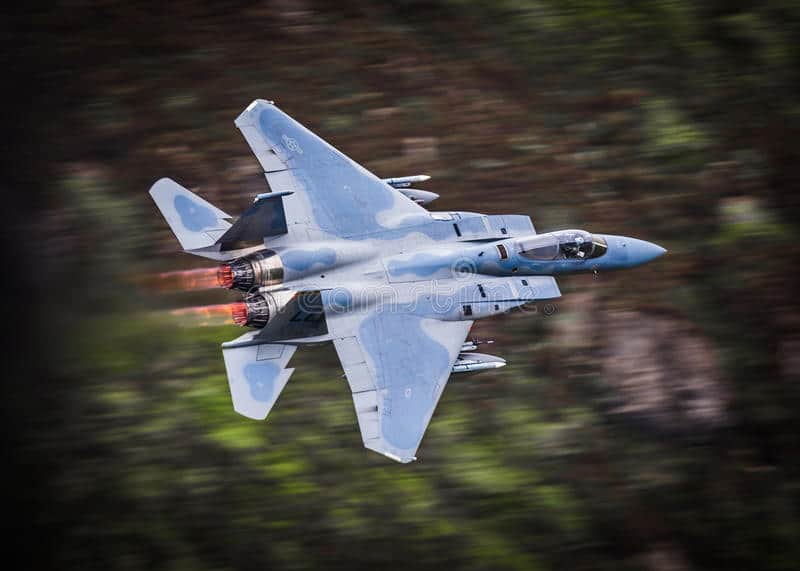
"I got the call that I was getting picked up #1 by the unit, and I’m 100% sure I would have been near the bottom of the pack without this interview prep. It truly was the difference-maker in my situation...I have my strengths I bring to the table, but also weaknesses I needed to overcome (needing age and medical waivers) so a strong interview was crucial.
...it very well could be the difference between getting your dream job or not. Totally worth it!"
Mike B.F-16 UPT Selectee
"I am totally in shock that they decided to select me without having a face-to-face. I could have never done it without your help."
Daniel C.C-17 UPT Selectee

"Thanks to your help, I was able to secure interviews at a lot of fighter squadrons. As you might expect, based on our practice session, I got my ass handed to me in the interview. Nerves, poorly formulated answers, and ultimately got rejected. The experience was invaluable. I took your notes to heart and did a much better job prepping for follow-on interviews. I was hired for F-22’s, as well as A-10’s. I chose to go with the A-10’s. I have been reflecting on the long list of people who have helped me continue moving forward towards this dream. You were at the top of that list. Thank you from the bottom of my heart."
Nick P.A-10 UPT Selectee
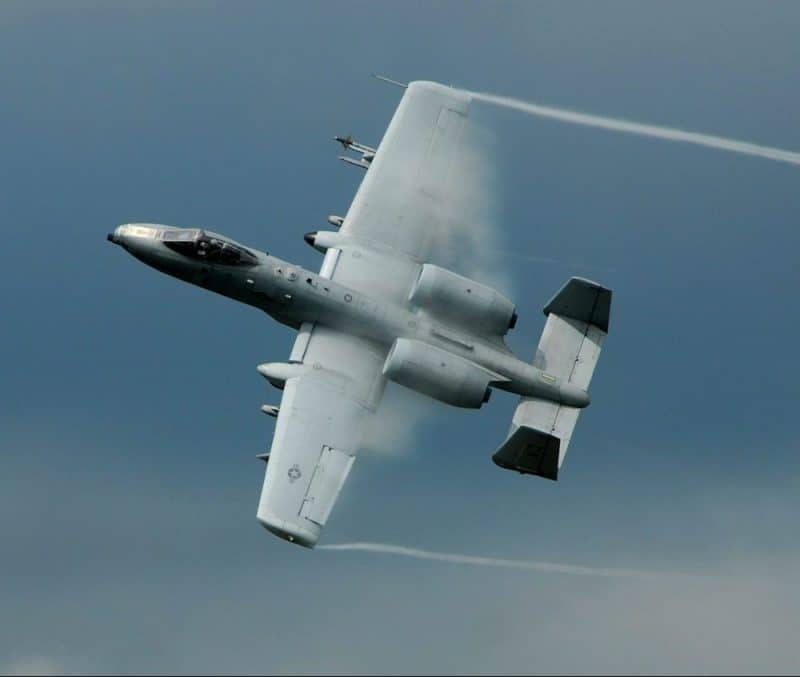
"Interview went great! Some questions I wasn’t expecting but I think the process helped me think through them a lot, and it helped me convey the points I wanted to get across in the best possible way. I was the #1 pick! Unbelievable. Thank you for all the help!"
Kyle E.F-15 UPT Selectee
"I got the slot! I think it's safe to say that I absolutely couldn't have done it without BogiDope's help. It gave me an enormous leg up."
Robert W.F-16 UPT Selectee
"I'll be flying the A-10! I can't wait to get to UPT and get started! Thanks for all your help! The interview prep was invaluable."
Nick C.A-10 UPT Selectee
"I got the call tonight…I’m going to be an F-16 pilot! Thank you so much for your help! Your interview prep was spot on."
Luke O.F-16 UPT Selectee
BogiDope Has Helped Hundreds of People Like You Get Into the Cockpit of Their Dreams
"Gunboss knows this test inside and out. He helped me understand where I was losing points and how to improve quickly. Ended up scoring a 99 Pilot, which made the coaching 100% worth it."
By End of Session Survey Response
June 4, 2026
Product: 1-on-1 Military Test Prep
"Jeff's 1-on-1 help paired with his AFOQT Wingman app is everything someone needs to max out their scores. It was super helpful!"
By End of Session Survey Response
May 29, 2026
Product: 1-on-1 Military Test Prep
"Jeff’s coaching was probably the best investment I made during my application prep. My Pilot score came back at 99 and I felt like I had a much better understanding of the test going in."
By End of Session Survey Response
May 23, 2026
Product: 1-on-1 Military Test Prep
"Sharky was very helpful and insightful! He provided great mentorship tailored by his personal experience, which was very useful. Grateful for the opportunity to get questions answered and ask for advice from an expert."
By End of Session Survey Response
May 13, 2026
Product: 45-Min General Strategy Session
"I was overwhelmed by all the AFOQT prep material online. Gunboss helped me cut through the noise and focus on what actually mattered. Super helpful coaching call."
By End of Session Survey Response
May 2, 2026
Product: 1-on-1 Military Test Prep
"Frances was very helpful and understanding. Thankful to have an expert to help me."
By End of Session Survey Response
May 1, 2026
Product: Military/FAA Medical Consultation
"CHAOS completely changed how I thought about the online interview, how I prepared, and what I said."
By End of Session Survey Response
April 29, 2026
Product: 1 HOUR INTERVIEW PREP
"Short version: Gunboss helped me stop guessing and start preparing with a purpose. Really solid coach and easy to work with."
By End of Session Survey Response
April 28, 2026
Product: 1-on-1 Military Test Prep
"Jeff was awesome. No fluff, no generic advice. Just a clear plan, great test-taking tips, and a lot of confidence going into the AFOQT."
Anyone targeting an Air National Guard or Air Force Reserve pilot slot—whether you’re brand-new to the process or already rushing squadrons and want to maximize your competitiveness.
No prior military or aviation experience is required. We start from the fundamentals and build progressively. Some candidates come with flight hours or military background, while others start from zero—our program accommodates both.
Plan to dedicate 3-5 hours per week to get the most from the Bootcamp. This includes attending live sessions, watching training videos, and completing assignments. The program is designed to work around full-time jobs or school schedules.
All live sessions are recorded and made available in your student portal within 24 hours. While live participation offers the benefit of real-time interaction, you won’t miss any content if you need to watch the recording instead.
Absolutely! Each student receives personalized feedback on their resume, cover letter, and interview skills from experienced military pilot coaches who know exactly what squadrons are looking for in candidates.
The Bootcamp provides structured, step-by-step guidance with accountability, personalized feedback, and access to coaches who have actually served on hiring boards. Our systematic approach prevents the common pitfalls of self-guided research.
Yes! The Bootcamp is specifically designed with ANG/AFR hiring processes in mind. Our coaches have extensive experience with these units and understand their unique selection procedures and culture.
Much of the résumé, networking, and interview prep applies universally, but the curriculum is laser-focused on ANG/AFR hiring. Future tracks for other pipelines are in development.
Week 1 of the Bootcamp is dedicated to exploring different military aviation paths and aircraft communities. You’ll learn about fighters, heavies, tankers, and helicopters to help determine which best aligns with your goals and strengths.
While we can’t guarantee hiring outcomes (no program truthfully can), we provide all the tools, knowledge, and preparation needed to maximize your competitiveness. Our past students have achieved significantly higher selection rates than the general applicant pool.
You’ll also be invited to join our alumni Mastermind network where you can connect with other applicants and receive ongoing support during your application journey.
We offer a 14-day satisfaction guarantee. If you complete the first two weeks and don’t feel the program is right for you, contact us for a full refund.